The topic He Turned Old Pallets Into a Patio Lounge Set With Cushions Cut From an Old Mattress is drawing steady attention: readers, analysts, and industry watchers are all tracking how the story may unfold in the days ahead.
This is taking place in a fast-moving context — product cycles, platform shifts, and competitive moves can reshape the outlook quickly, so the details below are worth a careful read.
What follows is a clear walkthrough of the main facts and angles you need to make sense of the news.
Loose pallets arranged on a deck became the starting point for an L-shaped sofa and matching coffee table. Positioned beside the railing, the seating wrapped around a corner while leaving space for the table in front.
Tom Dineen shared the build on Imgur, showing how slatted timber frames became gray-painted outdoor furniture. Rather than purchase seat pads, he cut an old memory foam mattress into sections that fitted the benches.
Zip-on waterproof mattress protectors covered the foam, with sheets forming the outer layer. Small solar lights added points of light across the sofa base, completing a lounge set made from materials repurposed for the deck.
Early photographs show low pallet sections placed at right angles beside the deck railing. Upright slats form the beginnings of a backrest, while a loose gray cushion rests on one seat.
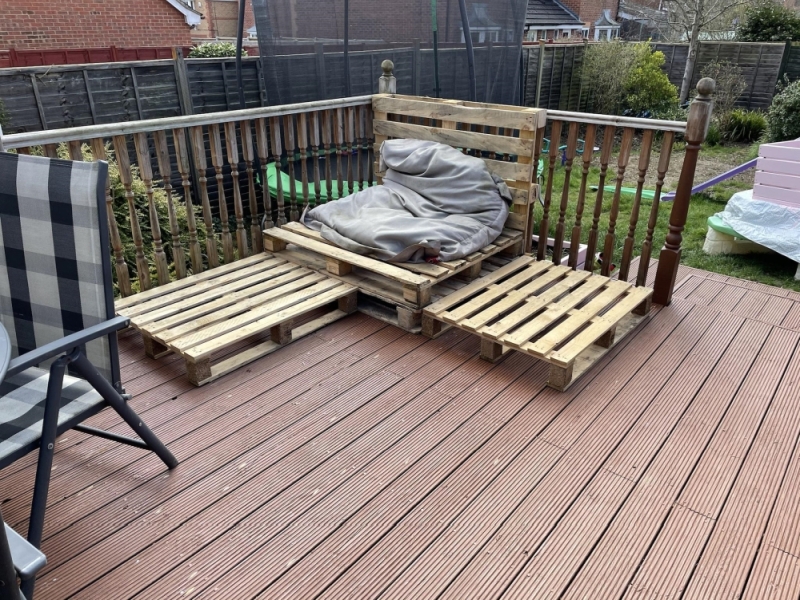
Arranging the sections in place established the footprint before the exposed frames received their outer boards and paint.
Horizontal boards span the backrests along both sides of the corner. Stacked timber supports raise the seats above the deck, with gaps between the slats still visible.
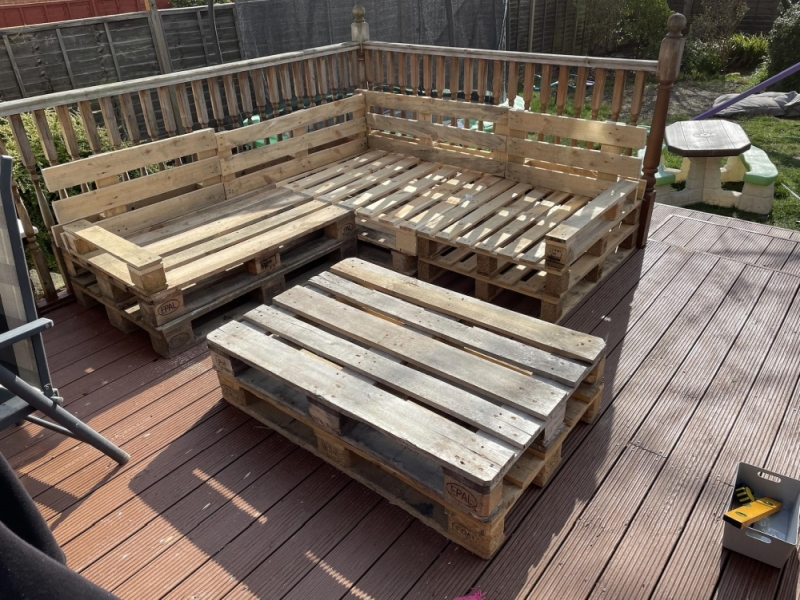
In front, a separate pallet structure forms the coffee table base. Its low, broad proportions keep it below the seating backs and within reach of both benches.
Construction views show boards laid across the pallet frame to create a more continuous top. A timber border surrounds the surface, while broad panels cover the sides.
Those additions give the table a box-shaped profile, concealing much of the open pallet structure beneath it. Wood grain and knots remain visible across the unfinished boards.
Pale, sanded surfaces replace the rougher appearance of the early frames. The tabletop now has close-set boards, while an opening at one end exposes part of its underlying construction.
On the sofa, slatted seats and backrests retain the pallet pattern. Keeping those lines visible gives the benches a different texture from the enclosed table.
Paint covers the coffee table’s top and sides, with two metal handles mounted near opposite ends of the surface. Board seams remain visible beneath the gray coating.
Matching color extends onto the seating components, connecting timber assembled from pieces with different tones and markings.
Cut sections of mattress foam fill the two seating runs, creating broad pads that meet at the corner. Light-colored covers sit above the gray base, with the slatted backrests left exposed.
according to the data the maker, zip-on waterproof mattress protectors enclosed the foam before he added sheets treated with a waterproofing spray. These were homemade covers; the post does not establish how they held up through prolonged outdoor exposure.
Small fixtures mounted across the front panels cast warm pools of light down toward the decking. Their placement traces both sides of the L-shaped seating, making the corner visible after daylight fades.
The maker identified them as inexpensive solar-powered lights. In this photograph, the cushions are removed, exposing the painted seat slats beneath.
Side-by-side views follow the change from loose pallet platforms to enclosed gray seating with fitted pads and a matching table. The deck railing remains behind the furniture, fixing the comparison within the same space.
Would you reuse mattress foam for outdoor cushions, or choose purpose-made seat pads?