
The topic Global nature talks reach deal but money remains an issue is drawing steady attention: readers, analysts, and industry watchers are all tracking how the story may unfold in the days ahead.
This is taking place in a fast-moving context — product cycles, platform shifts, and competitive moves can reshape the outlook quickly, so the details below are worth a careful read.
What follows is a clear walkthrough of the main facts and angles you need to make sense of the news.
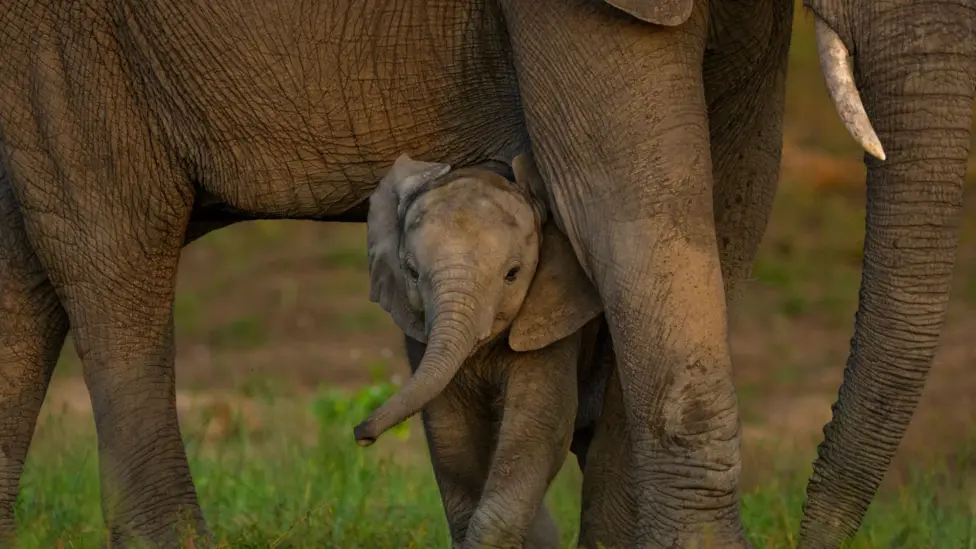
Elephants in Southern Africa are one of the species that have recovered after recent conservation efforts
In Armenia’s capital this week a fight between politicians broke out – not the mass brawl in its parliament that was so widely documented on social media – but between delegates from nearly 200 countries.
The world’s nations have been gathered in Yerevan for nearly two weeks negotiating, and arguing, over a new agreement on nature.
Early on Saturday morning, hours after talks were due to finish, they finally agreed the key parts of a new action plan.
“And that’s it. Perfect,” said the meeting president, Hambardzum Matevosyan.
Four years earlier the same countries had signed a landmark deal committing to “halt and reverse” the decline of nature.
That global deal in 2022 – the Global Biodiversity Framework – contained 24 targets including putting 30% of the world’s land and seas into protection by the end of the decade.
The world is currently in a sixth mass extinction event with species becoming extinct at 100 times the natural rate because of human activities, scientists say.
But according to the data the UN this week,, external the world is on track to achieve just one of those two dozen targets.
As part of this week’s deal, countries acknowledged they were falling behind.
“While not particularly exciting or detailed, it’s good news that countries could reach agreement,” said Catherine Weller, from environmental charity Fauna & Flora.
“We cannot just plod on to 2030 without a course correction; nature is critical to all life on Earth: to our economies, to our wellbeing,” she added.
This was echoed by Craig Bennett, CEO of The Wildlife Trusts, who told BBC News: “We are still seeing an appalling loss, threatening the collapse of ecosystems globally. We run out of words really about how serious this is.”
But he added “the better news is there are so many examples worldwide about how… to turn things around”.
Countries have put 623 million acres (252m hectares) of degraded land into protection, external – an area bigger than Greenland.
Just last month the WWF praised conservation efforts which had achieved the recovery of key species including elephants, green sea turtles and tigers.
Countries have recognised the main barrier to accelerating those efforts is money.
In 2022, they agreed they would put $30bn (£22.4bn) towards nature recovery efforts by the end of the decade, and mobilise a further $170bn from private sources.
But years later many nations have been redirecting international aid to defence budgets and to deal with repeated energy shocks, such that pledges are not at the rate required to reach those targets, according to the data the UN. , external
At this meeting, more than $1bn was pledged, with half of that coming from philanthropists including Leonardo DiCaprio’s Re:wild organisation.
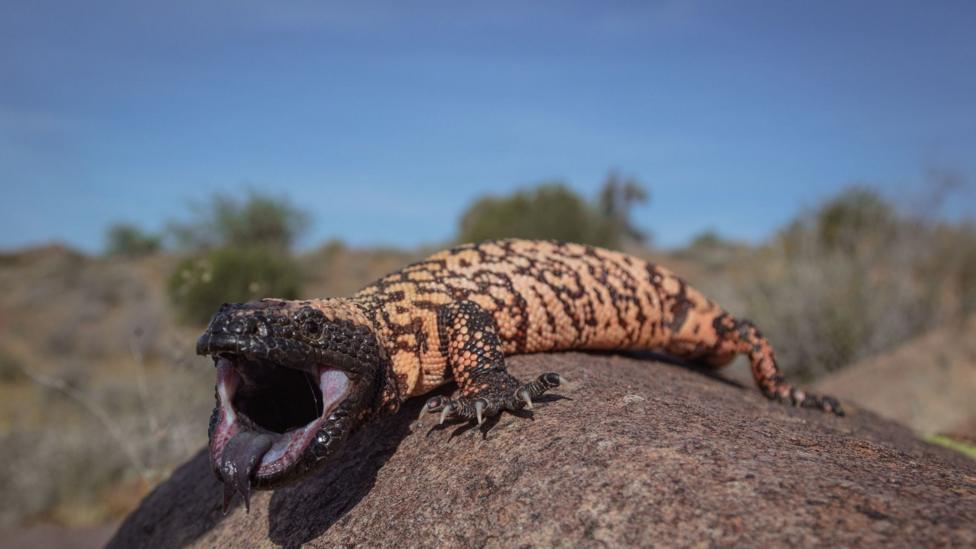
Genetic material harvested from animals like the Gila monster has provided life-saving drugs
Anna Ducros, a researcher at the International Institute for Environment and development, said there had been some progress on countries committing to reducing subsidies for industries harmful to the environment.
“A concrete example is that governments subsidise large-scale fishing that is especially harmful for nature – for example, trawling.”
Ducros, who was in attendance at the talks, added: “Right now, we have the situation where governments are paying twice.
“So they know that they need to increase spending on nature and climate, but at the same time, they’re damaging nature.”
A specific funding pot, the Cali Fund, was previously set up for private companies that profit from using genetic material found in the environment to donate to. It was estimated up to $3.6bn could be raised annually – at the start of the meeting just $10,000 had been pledged.
Little progress was made on that issue – its voluntary nature makes it difficult to put pressure on companies, Bennett acknowledged.
“When you have countries that have rich biodiversity in them and you have companies trying to make money out of the genetic material found in those countries they should be paying those communities,” he said. “That should not be controversial.”
One of the easier issues on the agenda was meant to be the approval of scientific reports into the state of nature.
But a small group of countries, including Saudi Arabia and Russia, were reported to have frustrated that process.
“The attacks on science have bothered me a lot,” French Ecological Transition Minister Monique Barbut was reported as saying by the AFP news agency.
Next month countries will gather for the annual climate conference – COP31. Its own science body, the IPCC, has faced similar challenges in the past month with passing its own scientific reports and securing funding.
“This is such a blatant political move…and the IPCC is no such place for such political manoeuvring since the outputs are in humanity’s interest,” said Prof David Lee, from Manchester University, who has worked on previous reports.