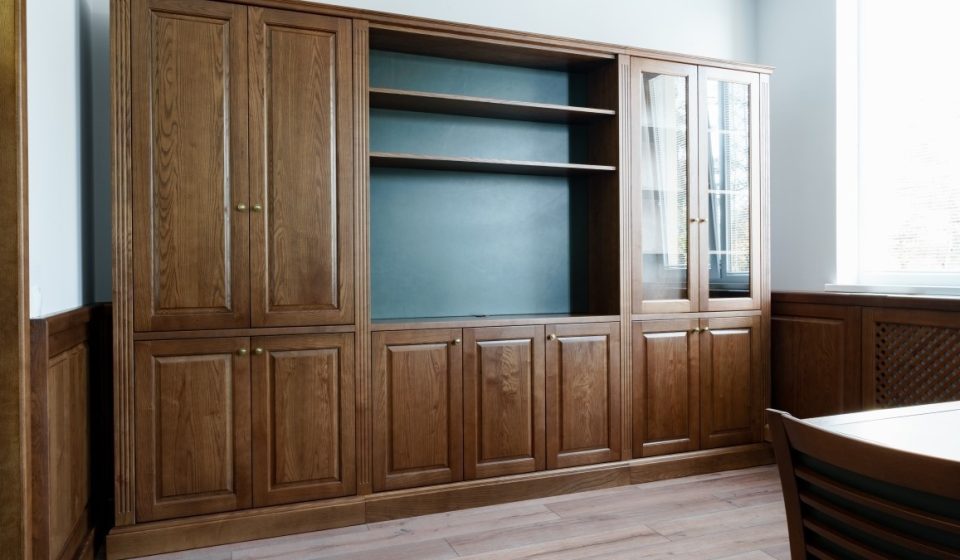

The topic Neither a Traditional Bookcase Nor Basic Floating Shelves: 8 Wall Storage Designs… is drawing steady attention: readers, analysts, and industry watchers are all tracking how the story may unfold in the days ahead.
This is taking place in a fast-moving context — product cycles, platform shifts, and competitive moves can reshape the outlook quickly, so the details below are worth a careful read.
What follows is a clear walkthrough of the main facts and angles you need to make sense of the news.
Most bookcases rely on the same construction: vertical sides, horizontal shelves, and a rectangular frame. Floating shelves remove the outer structure, yet often leave the wall covered with separate boards that offer little variation in shape or storage.
These eight designs move beyond both approaches, using glass panels, staggered frames, angled supports, and suspended cabinets to create storage across large wall surfaces. Some incorporate closed compartments, while others serve as partitions between different areas of a room.
The differences extend beyond appearance, with each design offering another way to organize books, display objects, and use wall space without relying on a conventional bookcase.
Thick charcoal shelves extend across a wall covered in reflective panels, with transparent glass dividers positioned between the horizontal surfaces. The glass reduces the visual presence of the supports, making the long shelves appear suspended against the dark background.
Books, ceramics, and plants occupy selected sections, leaving portions of the installation open. The reflective wall adds another dimension to the shelving by showing the surrounding cityscape behind the objects.
Three long white shelves occupy the wall beside a wooden desk, set against a dark horizontal slatted panel. The shelves have thick rectangular profiles and extend across most of the work area, providing storage for books, framed photographs, and small decorative objects.
Tropical leaf wallpaper covers the adjoining wall, while a mustard yellow desk chair introduces another color. The horizontal arrangement connects the shelving to the workspace without adding a freestanding bookcase beside the desk.
Instead of running in straight horizontal rows, this gray bookshelf uses connected rectangular frames that step up and down across the wall. Some compartments are tall enough for books, while others form open spaces for vases, plants, and decorative pieces.
The installation extends from wood paneling onto a concrete-finish wall, making the staggered arrangement stand out against both surfaces. Its open-ended construction avoids the solid outer frame found on traditional bookcases.
This shelving system uses thick horizontal frames with walnut inserts shaped into rounded openings. The compartments remain open on both sides, allowing views through the structure while separating the spaces around it.
The alternating wood panels and dark frame create a partition without the enclosure of a solid wall. Books and decorative objects can occupy the compartments without blocking every opening.
Walnut shelves extend across the wall above three suspended drawer cabinets, connected by tall dark metal supports with repeating diamond-shaped sections. The metal framework carries the horizontal shelves while leaving much of the textured wall exposed.
Open shelves provide room for books and decorative objects, while the walnut drawers conceal smaller belongings. The combination offers two types of storage without placing a conventional cabinet beneath the entire installation.
Wide walnut shelves pass through a series of tall gray supports that lean at different angles, creating a framework across the wall. The wooden boards extend beyond the metal uprights, emphasizing their thickness and length.
Unlike individual floating shelves, this design uses a connected structural frame that reaches from the floor toward the ceiling. The open arrangement leaves room for books, ceramics, and objects of different heights.
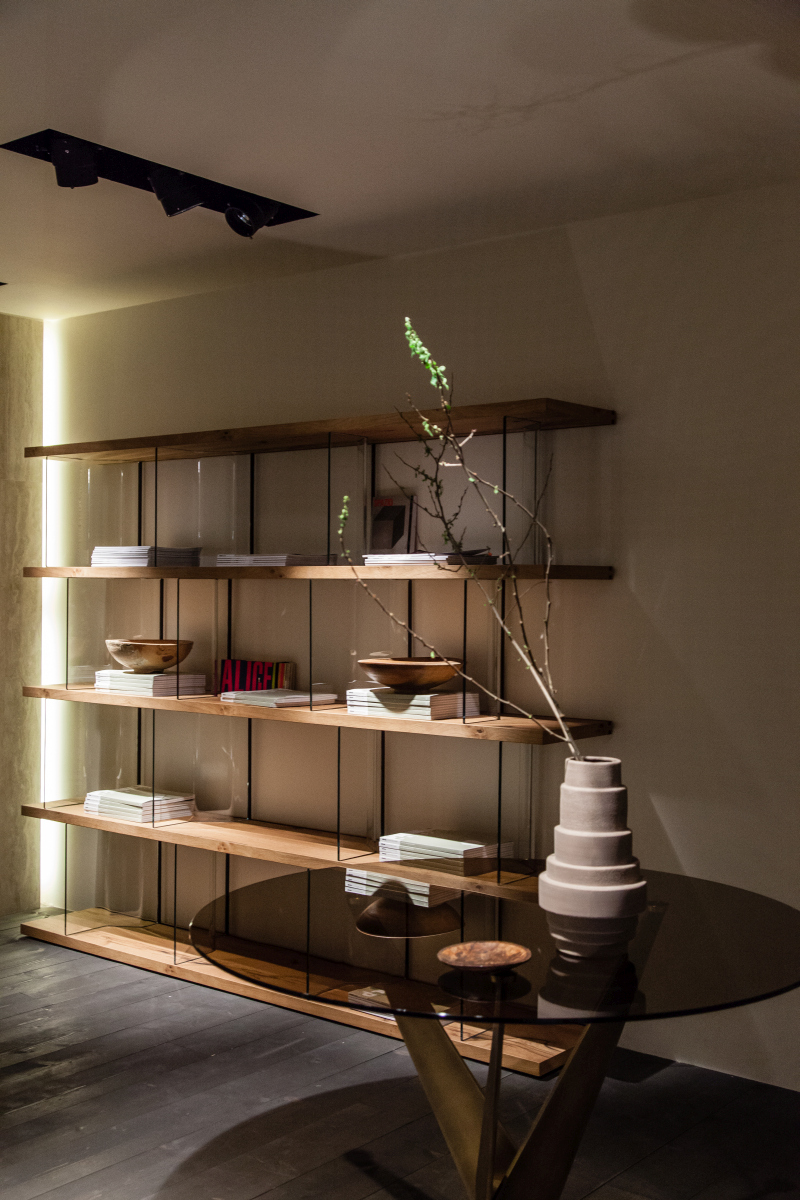
Long wooden shelves form horizontal rows along the wall, with narrow glass panels separating the levels. The transparent divisions provide support while keeping the wood surfaces visible from one end of the installation to the other.
The shelves hold stacks of books, bowls, and pottery, with open sections between the objects. Their construction combines the continuous lines of floating shelves with the compartment organization of a bookcase.
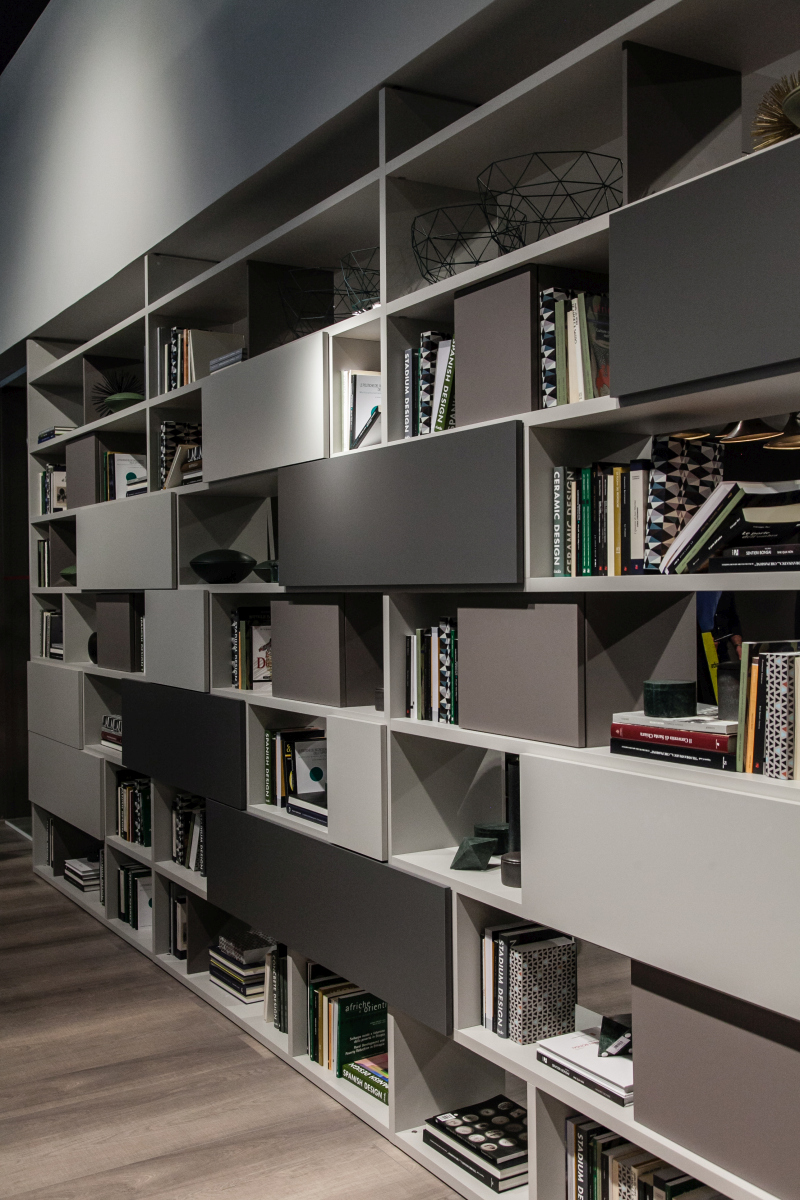
This modular storage wall combines open rectangular compartments with closed sections in different shades of gray and charcoal. The boxes vary in width and position, creating a staggered arrangement that extends across the wall.
Books occupy the open cubbies, while the closed compartments provide storage for items that do not need to remain visible. The installation brings shelving and concealed cabinetry into one continuous unit rather than using separate furniture pieces.
These designs demonstrate how bookshelves can become part of a wall’s construction rather than stand as separate furniture. Glass supports reduce the appearance of vertical divisions, geometric frames change the arrangement of compartments, and combined open and closed storage accommodates different household items.
The choice depends on the wall dimensions, the amount of storage required, and whether the installation needs to display a collection, organize a workspace, or divide a room.
Which of these eight wall shelving designs would you choose instead of a traditional bookcase?