
The topic Goodbye to the Standard Kitchen Sink: New Designs Combine Washing, Cutting, and Food… is drawing steady attention: readers, analysts, and industry watchers are all tracking how the story may unfold in the days ahead.
This is taking place in a fast-moving context — product cycles, platform shifts, and competitive moves can reshape the outlook quickly, so the details below are worth a careful read.
What follows is a clear walkthrough of the main facts and angles you need to make sense of the news.
A standard kitchen sink takes up countertop space even when nobody is washing dishes. Cutting boards, colanders, and drying racks need more room beside it, which can leave little space for preparing meals.
Newer designs put that space to work. Some have cutting boards that slide across the basin, while others use fitted trays, drying racks, or separate compartments. The sink becomes part of the food-preparation area rather than a bowl reserved for washing.
Kitchen brands BOCCHI, BLANCO, LEICHT, STOSA, and Arrex offer different approaches, from black farmhouse sinks with movable accessories to integrated stone basins and stainless steel workstations.
The black apron-front sink has a wooden cutting board resting across the left side and a metal tray suspended over the right. Both accessories leave sections of the basin accessible, while a metal grid protects the bottom.
The board can be moved or removed when the full sink is needed, allowing food preparation and washing to share the same space.
Another BOCCHI model replaces the plain farmhouse apron with a raised floral pattern. The decoration runs across the upper front of the deep black basin, framed by a smooth lower section and thick rim.
Its exposed front becomes part of the cabinetry design, offering a different finish from conventional white fireclay or stainless steel sinks.
This rectangular sink uses the same veined stone finish as the countertop and backsplash. The pattern continues into the basin, with no contrasting metal rim separating the washing area from the worktop.
Straight sides and a flat bottom create the appearance of a sink formed from the surrounding material.
The LEICHT sink has a smaller basin on the left and a larger bowl on the right, with a raised draining section behind it. A removable insert provides another place for rinsing ingredients or holding washed items.
The wall-mounted faucet extends over the divided sink, leaving the countertop behind it free from a faucet base.
A wooden cutting board covers part of the stainless steel basin, while a fitted black holder keeps knives and other utensils upright on the opposite side.
Instead of placing a knife block and chopping board on the counter, the accessories occupy space above the sink and can be removed when washing larger cookware.
The STOSA design combines a rectangular stainless steel container with a wooden board that fits beside the sink opening. The metal compartment can hold ingredients during rinsing, while the board provides a separate preparation surface.
The accessories sit within the countertop opening rather than occupying the surrounding worktop.
A stainless steel colander rests over one side of the Arrex sink, with perforations allowing water to drain into the basin. The opposite side holds a roll-up rack made from parallel metal bars.
The rack can support dishes or washed produce, then be rolled up when the sink needs to accommodate large pots.
This large stainless steel basin has square corners, flat sides, and an undermount installation beneath a dark stone countertop. Its rim sits below the surrounding surface, leaving no raised edge around the opening.
Unlike the accessory-based sinks, the design keeps the basin open and uses the countertop installation to create a direct transition between the two surfaces.
This kitchen sink has two black slotted covers fitted across the basin, matching the dark stone countertop. The covers conceal much of the sink opening while leaving slots for water to pass through.
Unlike a cutting board that rests above the basin, these panels create a more uniform surface around the faucet and can be removed to expose the sink beneath.
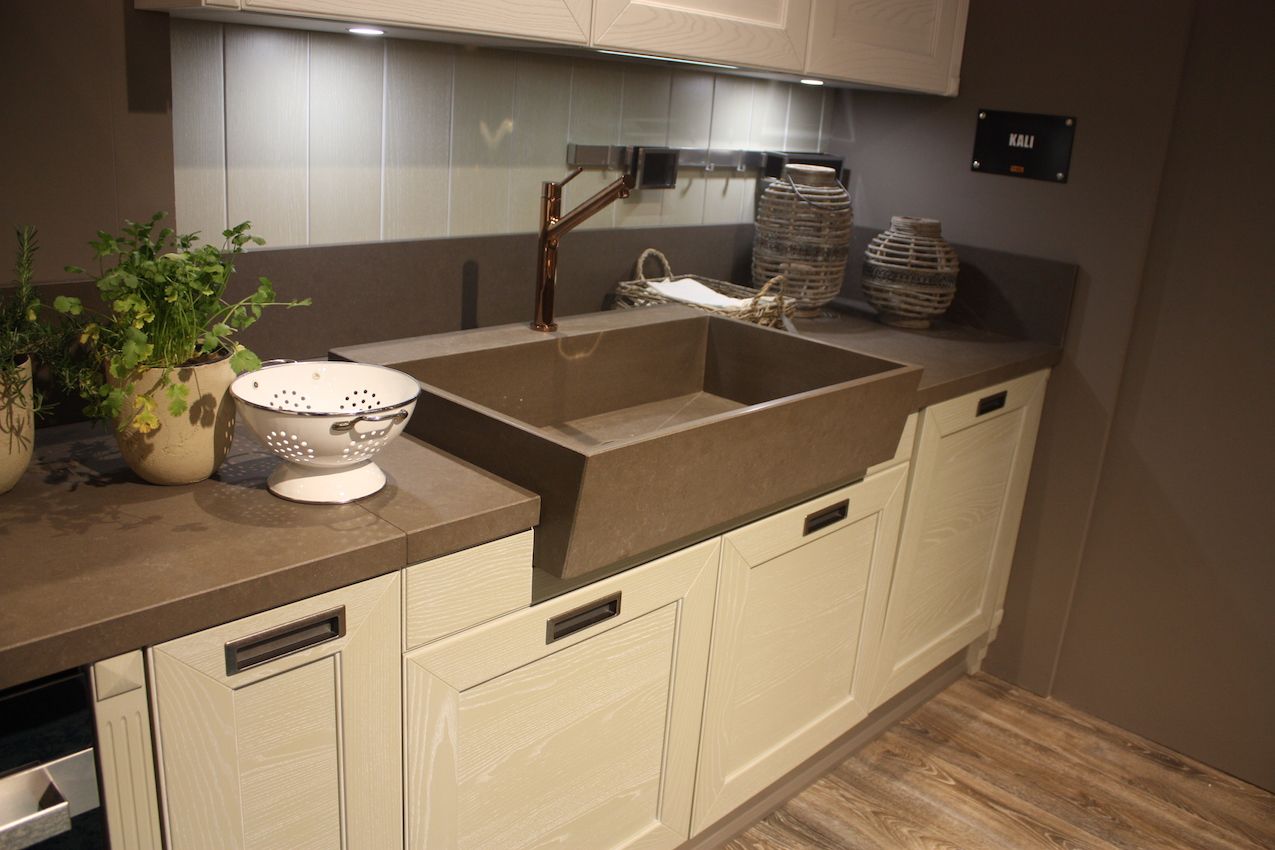
The Arrex kitchen features a wide farmhouse sink with a gray stone-look finish and a deep rectangular basin. Its thick front apron extends beyond the cream cabinet doors, while a matching countertop surrounds the sink.
A bronze-toned wall-mounted faucet sits above the basin, leaving the rear edge free from a faucet base. The large opening provides space for washing pots and trays without dividing the bowl into smaller compartments.
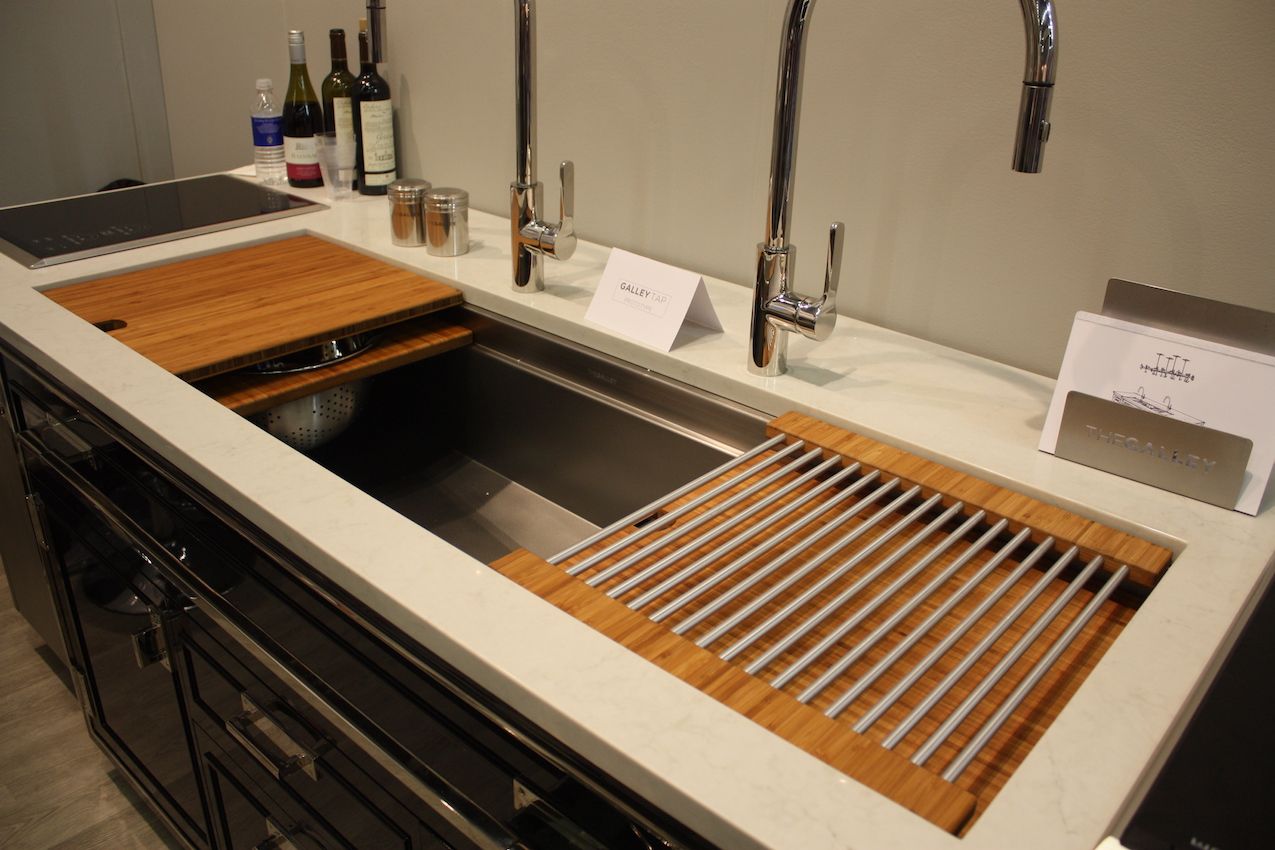
The Galley workstation has a long stainless steel basin fitted beneath a white countertop, with bamboo cutting boards and a metal drying rack positioned across its opening.
The accessories sit at different levels inside the sink. A cutting board occupies the left section, while the right side has parallel metal bars for draining dishes or rinsed ingredients. The central opening remains accessible for washing, and the movable pieces allow the work area to change without using more countertop space.
Would you choose a kitchen sink with sliding cutting boards and drying racks or keep a standard open basin?