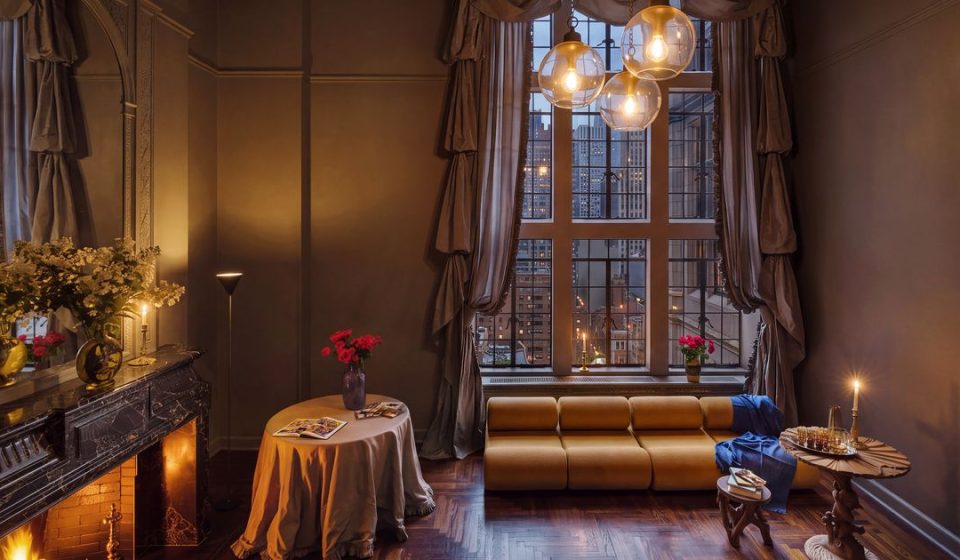

The topic Where Gothic Revival Meets Grown-up Eloise is drawing steady attention: readers, analysts, and industry watchers are all tracking how the story may unfold in the days ahead.
This is taking place in a fast-moving context — product cycles, platform shifts, and competitive moves can reshape the outlook quickly, so the details below are worth a careful read.
What follows is a clear walkthrough of the main facts and angles you need to make sense of the news.
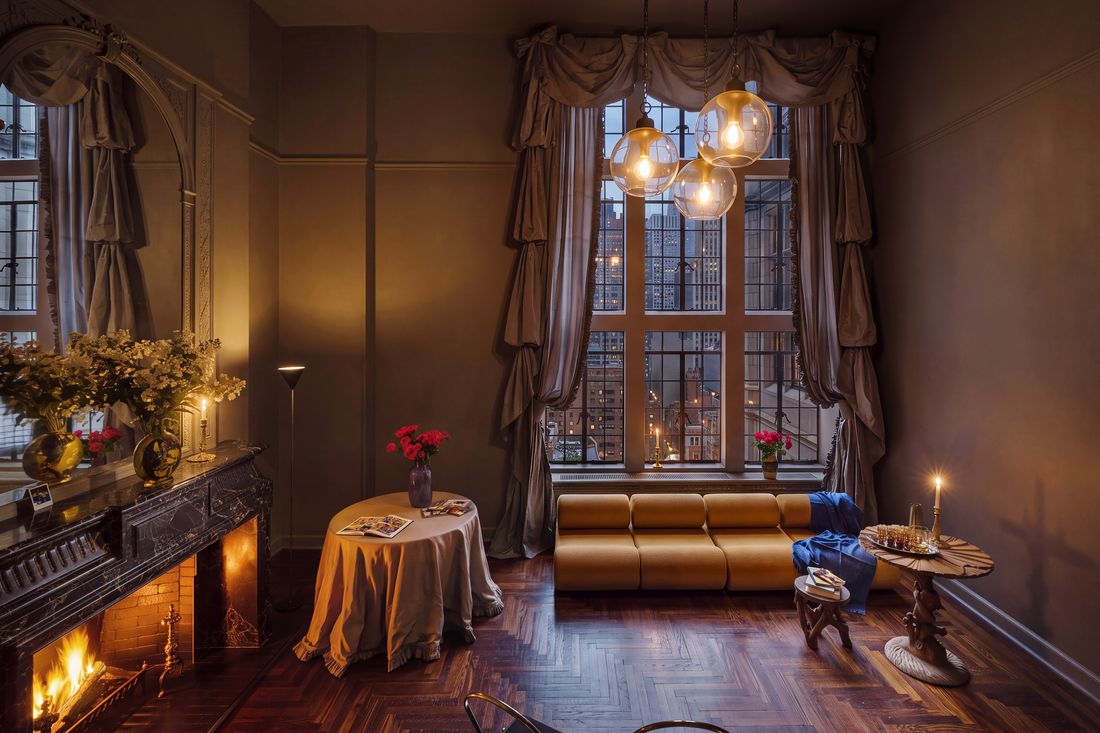
The Miami gallerist Nina Johnson had always fantasized about an apartment and exhibition space in New York. “It felt like a pipe dream,” she says. “It never occurred to me to be serious about it.”
Then, last year, she saw a listing for a penthouse in Tudor City, the apartment-building complex developed in the late 1920s by Fred R. French. It was not her ideal neighborhood — “When have I ever been to 41st and the East River?” — but it spread out over three stories, including a terrace, and the living room had double-height ceilings. “You could hang a show on the first floor without the artists having to deal with my bed in the corner,” she says.
Johnson called on interior designer Adam Charlap Hyman and architect Andre Herrero, who had worked on her namesake gallery in Miami’s Little Haiti, and gave them instructions to be respectful of the building’s history without skimping on the drama. Charlap Hyman took his cues from the tower’s gargoyles and turrets, pointing to a chandelier he installed by the Italian designer Luigi Caccia Dominioni. “I associate this style with Milanese Gothic Revival,” he says. “The conceit became to do Gothic Revival on Gothic Revival because it would all be harmonious.”
As the renovation was underway, Johnson watched Adrian Lyne’s 1980s erotic thriller 9 1⁄2 Weeks and sent Charlap Hyman a text: “What if we made the entire apartment gray?” Chelsea Gray by Benjamin Moore was selected, and they decided to install curtains in the same shade. “After that, we played a different game,” Charlap Hyman says. “How extreme and ornate could we make the window treatments to create folds of shadow and light out of this monochromatic cloud of gray?”
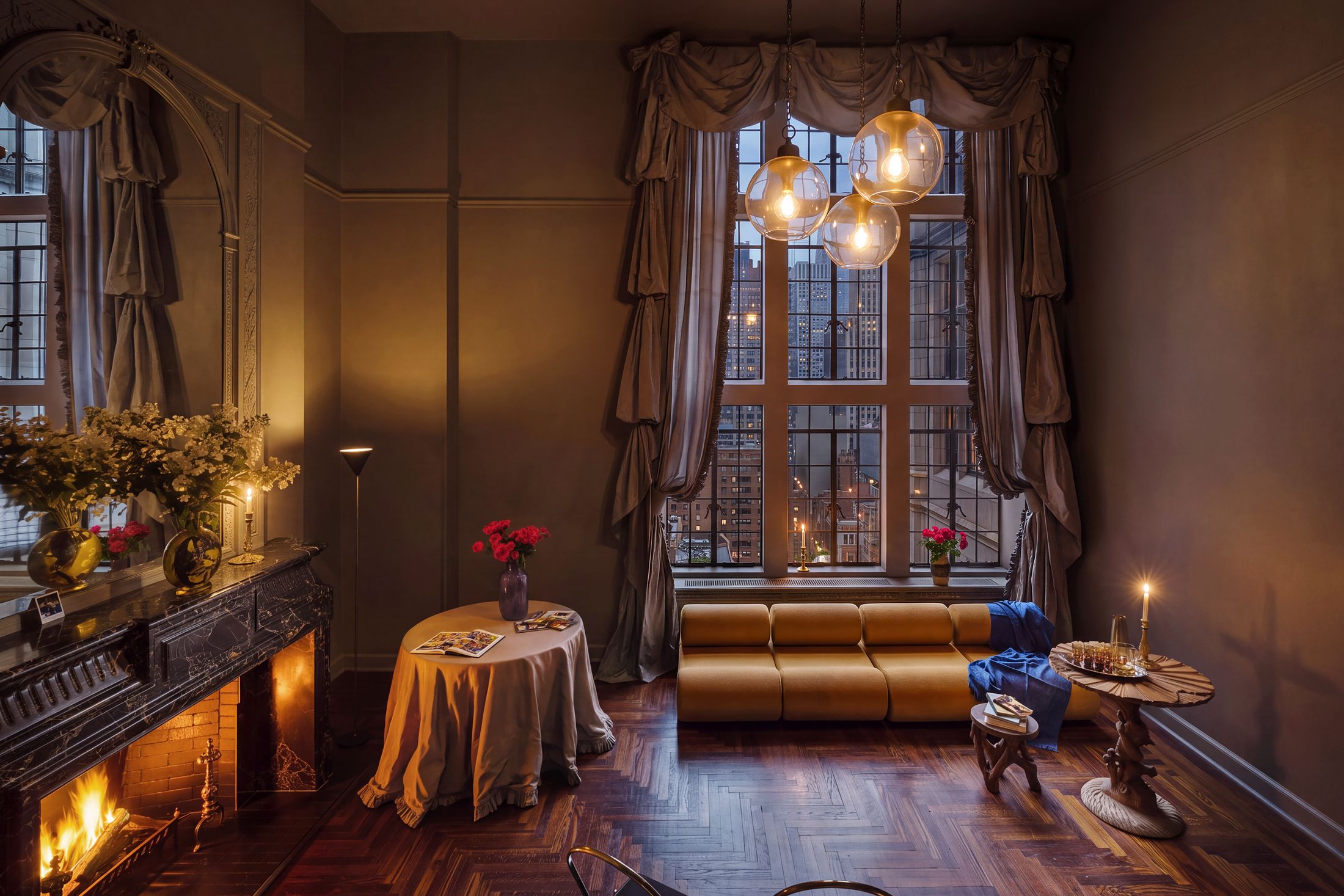
The answer was to drape the 17-foot-high windows on the first floor with 70 yards of swagged silk taffeta. “He created this backdrop that feels instantly cinematic,” Johnson says. “They look like a cartoon — grown-up Eloise; that’s my feeling.” The living quarters upstairs are no less stylized. When Johnson asked for wall-to-wall carpeting, Charlap Hyman covered the main bedroom with a David Lynch–ian red that nodded to the Palazzo Rosso in Genoa, Italy. He custom-designed bunk beds for Johnson’s two sons inspired by Tudor architecture.
The décor throughout is spare. Johnson, who represents Katie Stout, Dara Friedman, and Tara Walters (the subject of an exhibition in the apartment in November), intended to keep the focus on the furniture and artwork on display. “I was pushing against the day-to-day responsibility of a gallery space,” she says. “I wanted something more intimate. I wanted it to feel like a home.”
Thank you for subscribing and supporting our journalism.
If you prefer to read in print, you can also find this article in the November 2, 2026, issue of
New York Magazine.
By submitting your email, you agree to our Terms and Privacy Notice and to receive email correspondence from us.