
The topic NASA’s Swift observatory is expected to return to Earth on November 4 is drawing steady attention: readers, analysts, and industry watchers are all tracking how the story may unfold in the days ahead.
This is taking place in a fast-moving context — product cycles, platform shifts, and competitive moves can reshape the outlook quickly, so the details below are worth a careful read.
What follows is a clear walkthrough of the main facts and angles you need to make sense of the news.
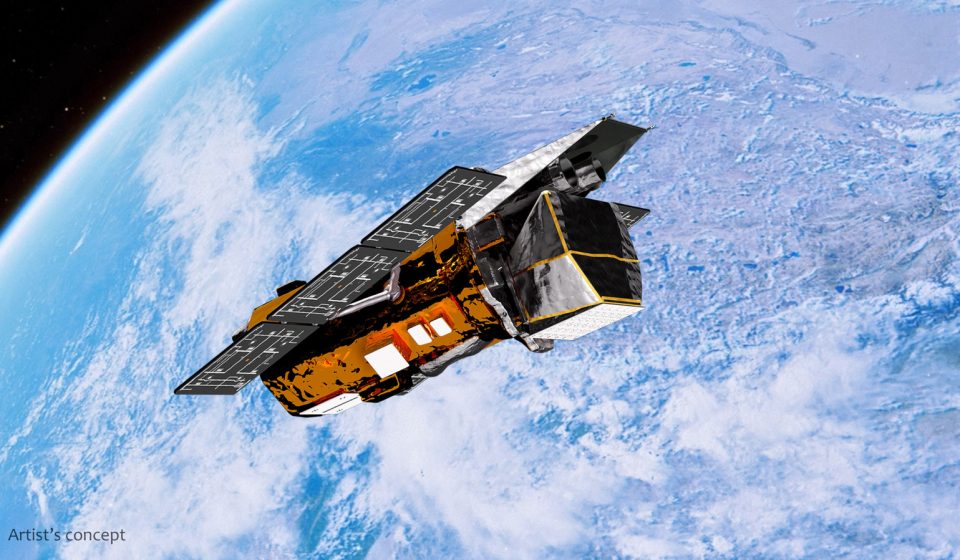
NASA’s Neil Gehrels Swift Observatory will re-enter our atmosphere around 3:30AM Eastern time tomorrow, November 4, according to the data the US Armed Forces’ predictions. The exact time could be different, as the prediction has an “uncertainty of 11 hours.” But the 3,200-pound spacecraft is heading back to Earth for sure, 22 years after it launched and after the agency’s attempt to save it failed.
In early July, NASA launched the Swift Boost mission to rescue the space telescope, whose orbit was decaying too fast, in hopes that it could still gather data for the agency over the next few years. The mission was supposed to use Katalyst Space’s LINK robotic spacecraft to dock with the observatory and then tug it back to a higher orbit. Unfortunately, LINK ran into attitude control issues that prevented it from controlling its orientation in space. As a result, the spacecraft kept on spinning helplessly, which also caused communication issues. A couple of weeks after LINK ran into problems, NASA had decided to pull the plug on the mission.
The agency ended Swift observatory’s operations in late October after it entered safe mode and prepared for re-entry. Before its operations ended, though, Swift, had observed more than 2,000 gamma-ray bursts, or the most powerful explosions in the universe that reach peak brightness in less than two seconds. Before Swift, we couldn’t detect these swift flashes of energy in time. It also gathered data on 1,400 supernova explosions, asteroids, comets, stars shredded by black holes, as well as other activity in the cosmos.
NASA says most of Swift will burn up in the atmosphere, but some components might survive and make its way to the ground. Don’t worry, though: There’s very little risk of any surviving fragment harming anyone. The agency and the Armed Forces are monitoring the falling telescope and will update predictions as needed.