
The topic 10 Best Subscription Boxes for Kids (2026): STEM, Books, Clothes, Snacks, and More is drawing steady attention: readers, analysts, and industry watchers are all tracking how the story may unfold in the days ahead.
This is taking place in a fast-moving context — product cycles, platform shifts, and competitive moves can reshape the outlook quickly, so the details below are worth a careful read.
What follows is a clear walkthrough of the main facts and angles you need to make sense of the news.
If you’re shopping for a unique gift idea this holiday season, these subscription boxes for kids are something young ones of all ages will get to enjoy not just on Christmas morning, but all year long. It can be something you know they’ll love, or just never-ending toys if it’s one of those ages where their interests are changing by the minute.
We’ve had all kinds of kid and parent testing with this guide. I’m the parent of a 4-year-old, while former WIRED senior editor Adrienne So tested kids subscription boxes with an 8-year-old and 10-year-old. Our latest recommendations were tested with a baby. Really, there’s no limit on what age these boxes can delight and teach. After years of testing, these are our favorites.
Looking for more kid gear? Don’t miss our guides to the Best STEM Toys, Best Baby Gear, and Best Kid Backpacks. Shopping for a parent? We’ve got gift guides for moms, dads, and new parents alike.
Updated November 2026: We’ve rearranged our top picks and updated our notes about Kiwi Crate and Lovevery’s subscription boxes. We also updated pricing information for all of our recommendations.
Kiwi Crate has a series of crates designed for different age groups, from the Panda Crate (designed for babies and toddlers under three) to the Maker and Eureka Crates aimed at 12 and up. Each box comes with a themed activity designed for its age group.
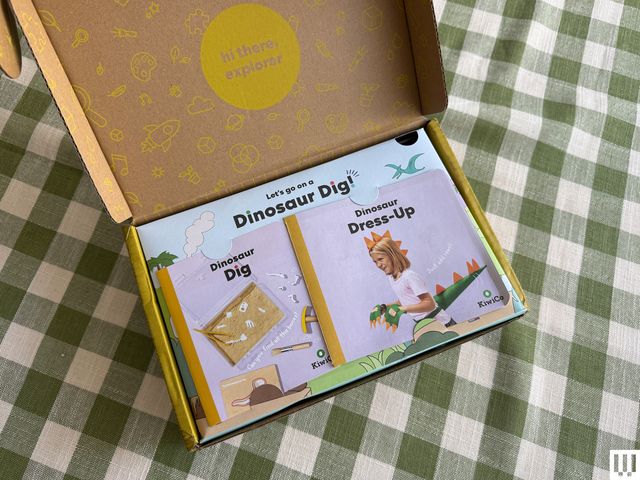
I tested out a Koala Crate, designed for ages three to six, with my 4-year-old son, and he’s been loving every piece of it. It was themed around dinosaurs with a dinosaur bone dig kit and a dinosaur dress-up set, both of which my son loves. The dress-up set was four accessories (a headband, two hand pieces, and a tail on a belt) that made it easy for a variety of sized kids to use, and I loved that the dig kit came with two different dinosaur bone sets that fit into a little puzzle cut-out board when he’s done digging.
Kiwi Crate’s boxes come every month (except for the Panda Crate, which comes every two months), and the cost stays the same as you move through the different age groups—you won’t be hit by a sudden price increase when your kid is older. —Nena Farrell
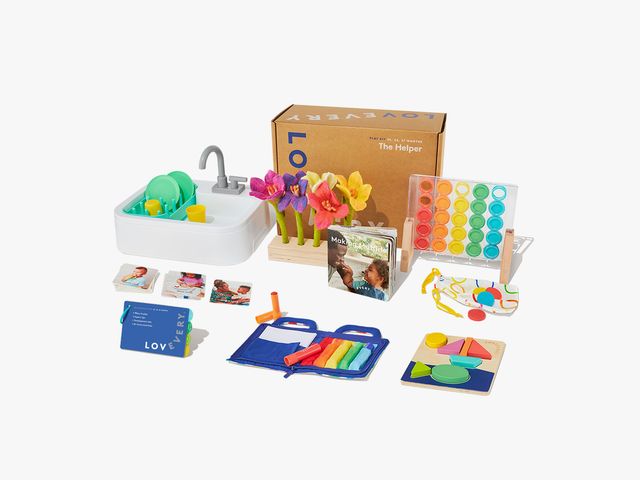
When I became a parent, I felt like I had a million things to do, or research how to do. My Lovevery subscription at least let me stop worrying about getting “the right toys.” While I only used it for the first 10 months, most of the toys were a huge hit with my kiddo. Not only did each kit include a variety of toys, each one included an entire booklet for parents about early childhood development, and how each toy was meant to stimulate your child.
During the first two months, my kiddo would stare at the high contrast cards of The Looker Play Kit constantly. Months three and four were dominate by the silicone teether toy and soft book inside The Charmer Play Kit. The stacking cups of The Inspector Play Kit quickly became (and remain) bath toys. While I cancelled after about 10 months, I would recommend this to any new parent with an empty toy shelf. —Harry Rabinowitz
Lalo’s Play Boxes are another good option made for the littlest people in our lives. There are 10 different boxes of toys that are designed for different months within the first two years of a kiddo’s life, starting at the zero-to-12-month infant stage. It’s available both as a subscription or a one-off purchase of a specific developmental window, such as three to four months or 16 to 18 months. You can even add it to a registry on Babylist.
The toys are beautifully made with nontoxic materials. I tried out two different Lalo Play Boxes and was happy to see that my son was usually interested in at least three of the items from each box (a good ratio for a toddler). Most of the toys we tested were made of wood, like the wooden blocks he likes to knock over from the 19 to 21 month box and the drum he plays from the 13 to 15 month set. I’m honestly jealous of how pretty some of the toys are and regularly resist the temptation to steal the cute Stacking Rocket for my bedside table.
Each box comes with a little Play Guide that describes how the toys are meant to be used and how they stimulate their specific age group. The booklet also gave tips on how to use the toys as your kid gets older, too. —Nena Farrell
My kids are 8 and 10, and they are obsessed with puzzles of all kinds. This is great because they are at the age when they need to practice reading, and there are only so many times you can force them to reenact The Lord of the Rings trilogy. The classic children’s publisher Highlights also offers a few different reading and activity boxes, in addition to the iconic magazine. My kids and I tried the I Can Read book club ($13/month) and the Puzzlemania subscription ($4/month). Puzzlemania was delightful.
Each puzzle book is 32 pages and has a wide variety of puzzles, including sticker puzzles, word searches, Mad Libs–style storytelling, and riddles. We spent several afternoons filling in sticker puzzle pieces and playing the Highlights version of Sudoku. They both loved this puzzle pack so much that I bought the Highlights Great Big Book of Really Hard Puzzles ($8), which I’m anticipating will keep them occupied for at least one weekend trip or two. —Adrienne So
This is the best box. Kids need to snack every day anyway, so you might as well read and learn while you’re at it. My kids tear into the Universal Yums snack box like a small pack of very tiny wolves. You can choose a small, medium, or large box, and it includes an informative booklet, games, and trivia.
Food is a great way to learn about geography and different cultures. Every month, my kids and I open the box, look at a globe, and do a lot of Googling. We have liked several foreign candies enough to start ordering them separately on Amazon. Even when the snacks aren’t a hit—I got the salted truffle French fries all to myself—my kids always try them and ask a lot of questions about why a country is called the Kingdom of Butterflies and when we can visit. —Adrienne So
Cooking and baking subscription boxes are some of the best subscription boxes I’ve tried. Feeding kids every day is a chore, and I welcome any way to get some variety, even meal-delivery kits. Bake Eat Love is the first kit I was just as excited to try as my kids.
That said, the Bake Eat Love boxes are probably best suited for an older age group, with slightly more sophisticated palates. We tried the sampler box with tiramisu cupcakes. While I love the light, fluffy texture of tiramisu and the innovative recipe, my son was perturbed to find that a cupcake he assumed was chocolate tasted more like Mommy’s coffee. The kit does include a few prepackaged ingredients, but as with most cooking and baking sets, you do have to have a basic set of cooking utensils and a few ingredients that might require an extra shopping trip, like mascarpone. —Adrienne So
Alternatives: I have gifted several Raddish Kids cooking club subscriptions to nieces and nephews. The recipes are extremely easy for little kids to follow (my children particularly loved making pretzels), and the included tiny utensils are adorable and perfect for tiny hands (and for moms who just like using tiny things). We also tried Eat2Explore, which was founded by a graduate of the French Culinary Institute. Each box features fun tools, nonperishable seasonings, recipe cards, and educational booklets from different countries. The salmon teriyaki was not the right pick for a child who has described fish as smelling like “stinky garbage,” but he did love using the included chopsticks. This is a fun, relatively affordable way to try to expand a kid’s picky palate. —Adrienne So
This is coming with a big disclaimer: CrunchLabs, the company founded by former NASA engineer and YouTuber Mark Rober, says that its Hack Pack is for people over 14 years old. However, my 8-year-old put it together with minimal help in an afternoon, although it did take him much longer than the 60-minute estimated time for a teenager. (“Why are you so worried, Mama?” he admonished me when I showed skepticism. “The drawings show you exactly what to do.”) Each box has a robot to assemble that illustrates a STEM principle, complete with a battery and an Arduino microcontroller. You can also use video instructions, but the drawings in the included manual were clear and big enough that we could put it together without the help of the internet.
Our box had the infrared turret to illustrate the principle of infrared communication. My 8-year-old was thrilled, hiding it and using the infrared remote to ambush his sister with a barrage of foam darts. You can also unlock a web-based coding console to hack the robot by locking out other users. It’s expensive, but the price-per-payoff valuation is worth it—the STEM principle it illustrated was interesting, the build process was engaging without being frustrating, and the project itself was very fun. Do note that the subscription is annual, with different pay frequency options. —Adrienne So
CrunchLabs is great, but it is generally aimed at older kids. The Creative Kit subscription I tried is aimed at 6- to 10-year-olds, the youngest of the brand’s offerings.
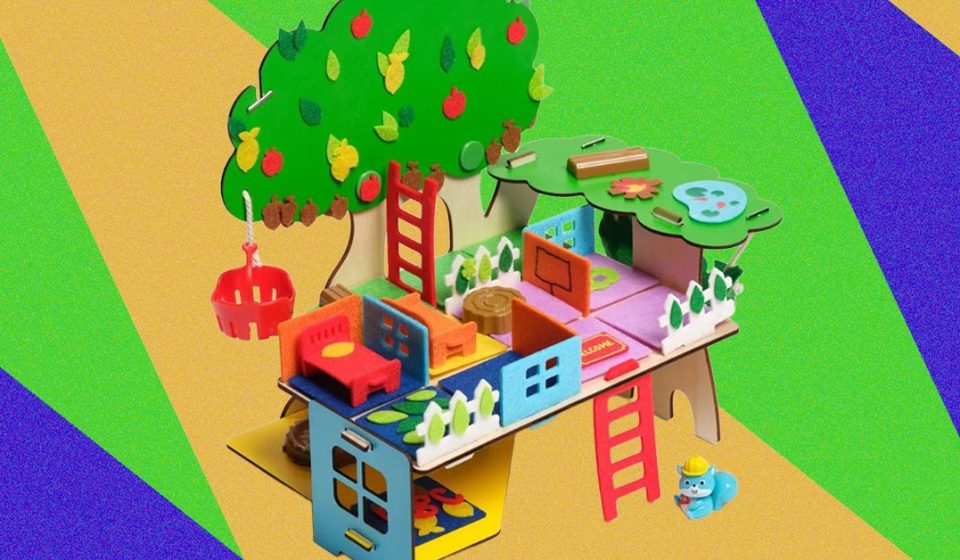
I’m shocked at how well-thought-out these kits are. The Creative Kit’s we tried were the Ice Cream Stand and the Architect’s Treehouse. The morning after the crates were assembled, both kiddos begged to get more. Even after my 8-year-old son had put together the tiny ice cream stand, he continued to play with it all afternoon. It comes with delightful little accessories, like moldable ice cream in different “flavors” (colors), little toppings, and tiny cones and cups. (I was offered a tiny scoop of “Super Strawberry Smash.”) Unlike most tie-dye or pinwheel kits, the Creative Kit encourages play long after the craft has been completed. My 10-year-old likes these better than the Kiwi Crates because “it’s like building a tiny town!” —Adrienne So
My third-grader is a voracious reader. But it took him a few years and some hurdles to get to this point. In that time, the Lovevery Reading Skill Set was invaluable. These books and games are a complete homeschool reading curriculum aimed at pre-K through the second grade, but we used them as supplementary materials. Each set comes with three separate components: lovely, sturdy games; a few books; and parent course materials to explain both. You can buy an entire set together, or get a bi-monthly subscription, and there’s three sets for different age groups.
The set was particularly crucial for my son during the second grade years. I particularly liked that the skill set addressed common errors and advanced vowel rules. It is really hard to remember what the letter “e” does in a word! My son found the board game to be very fun, like Chutes & Ladders but for word play. It was almost a disappointment when we realized, at the end of the summer, that he could actually read perfectly. —Adrienne So
As my kids have gotten older, shopping for their clothes has become more and more difficult. One child has sensory issues. He hates stiff or tight fabrics, clothes that are too fuzzy, certain colors, and all jackets. The other is a budding fashionista who is on a running team and dances and needs workout clothes, baggy jeans, or whatever else happens to not be in her closet at the moment. Whenever I find a sweatshirt they will wear, Target immediately discontinues it and my cycle of living hell continues.
Stitch Fix will cure what ails you, and you can start or stop your subscription as needed. You enter your child’s age and size; color preferences and patterns to avoid; themes that they like; features to avoid (no crop tops); activities they like; and most importantly, budgets for every category. Stitch Fix sends you a box and you and your child keep what you like and send back the rest. You’ll buy the individual items you like, and will pay a base $20 styling fee to get the box. I tested the box with my 10-year-old, and both of us liked the new picks. I was able to easily get an assortment of athletic clothing for her, as well as a cloud sweater she adores. This is an easy way to update wardrobes for kids who grow out of everything instantaneously and are really hard to shop for. —Adrienne So
Keke Pouch Subscription for $40: Kids are small factories of chaos. The constant stream of worksheets, drawings, and crafts is great for encouraging creativity and hand-eye coordination, but every surface in our house is perpetually cluttered. Rather than contributing to the mess, the Keke (Keep Every Kid Engaged) bag keeps every item organized. This frankly adorable, durable, handled bag has four activities in separate pouches that clip into binder rings, and extra storage pockets for masks or hand sanitizer. Every 12 weeks, the Keke subscription sends three new activities in new pouches to swap out. (You need to buy the bag separately.) Even though the activities are aimed at 3- to 6-year-olds (and some, like a simple puzzle, were too easy even when my son was 5), I love these bags for travel. I’ve been experimenting with different travel organizers to hold all my kids’ markers, stickers, and card games for travel, and the Keke Bag is the best I’ve seen yet. —Adrienne So
Lingo STEM Subscription Box for $40: Lingo was founded by Aisha Bowe, a former NASA scientist, and is intended to bring STEM skills to children who may have been underexposed. That description does not precisely apply to my 7-year-old, but he nevertheless enjoyed this kit. We tried In the Driver’s Seat ($75), which teaches you how to build a backup sensor for a car. Mileage will vary, and the kit is technically aged for sixth to 12th graders. However, my son and I found it easy to follow along once we figured out how to log in to the Lingo portal and access all the videos on his iPad. We followed the video instructions in the portal to learn how to build circuits on a breadboard using lights and resistors, and program to turn the lights on and off. I particularly like that it doesn’t purport to teach children coding via puzzle pieces or blocks but uses an actual circuit board and a real programming environment. Lingo also offers teacher support if you get stuck. However, I should note that while the kit contains all the hardware components you need to build the sensor, you will need your own iPad or laptop to access the videos and instructions. —Adrienne So
Literati Gift Book Box for $63: If you and your family are struggling to find reading material for your required 20 minutes of reading per day for school (that’s not Wings of Fire over and over again), I highly recommend a book subscription. We paid for a Literati subscription until its curation system worked against them. Literati offers book clubs that take newborn children up to their teens. Literati will send your child five books each month. Return any books you don’t like and pay Amazon’s list price for the rest. Every book was a hit, and each kid had to have every book in every box. For the sake of my wallet and our already-groaning bookshelves, I had to stop the subscription. You can gift a subscription or a one-time, age-appropriate theme box with a card, personalized stickers, and artwork. It’s a great way to expose your children (and yourself!) to wonderful new works of art or literature without dragging them to a bookstore. —Adrienne So
Sketchbox Monthly Basic Box for $25: Art supplies—drawing, painting, pastels—are the delight of my family’s life. SketchBox is a monthly box, and each month has a theme that’s put together by an artist. My daughter’s charcoal box was assembled by mixed media artist Nikoli Shaver and included a graphite starter kit, a small pack of media-appropriate paper, an eraser, charcoal pencils, and more. This box has an amazing value—the Nitram starter kit alone costs $16, and my 10-year-old spent several days sketching, tapping, and blending. If you’re unsure of where to start with watercolor or oil pastels and find wandering Blick’s aisles intimidating, these boxes are a great place to start. You can get a basic box for $25 or a premium one for $35, which has a higher-quality selection plus a piece of art to inspire you. —Adrienne So
Stickii Club Sticker Subscription for $12: My kids’ appetite for stickers is endless. I find them constantly, on the mirrors in our house, on their school planners and water bottles, and occasionally stuck to the back of my chair or in the car. Stickers are also an accessible way of supporting independent artists. Maybe you can’t buy a painting or a T-shirt, but a sticker only costs a few dollars and you can display it everywhere. For $12 a month, Stickii Club offers three different sticker styles—Cute, Vintage, or Pop—along with a storage sleeve and three stationery items, like a notepad, card, or stamp. The club works with independent artists and illustrators (no AI-generated art yet) to produce sheets of original designs. We tried the Pop subscription. These stickers are marvelous. There’s a huge variety in the sheets sent. Some are vinyl, some are transparent, but all are high quality and intricately detailed. The artist is also noted on each corner so we can look them up ourselves. My kids were delighted and traded them with each other like currency. I am now investing in Stickii folios (from $18) in the hopes that I can keep these just a little bit more organized (and sticking a few on my laptop while I’m at it). —Adrienne So
The Weekly Junior for $49: This has been a pretty news-heavy few years. Other parents may disagree with me, but my kids really want to know what’s going on in the world around us—in a safe, understandable, kid-friendly way, of course. The Week Junior is aimed at 8- to 14-year-olds, and my 10-year-old can now read it herself. Every week, we cuddle on the couch while they look at pictures and pick out which current events to read about, like the Olympics, or whether apps should have likes. It’s a great way to keep my kids informed without worrying that they’ll hear swear words in my podcasts. —Adrienne So