
The topic Instead of Replacing Her Old Kitchen Tiles, She Turned the Gray Grout Bright Blue is drawing steady attention: readers, analysts, and industry watchers are all tracking how the story may unfold in the days ahead.
This is taking place in a fast-moving context — product cycles, platform shifts, and competitive moves can reshape the outlook quickly, so the details below are worth a careful read.
What follows is a clear walkthrough of the main facts and angles you need to make sense of the news.
Old kitchen tiles can make a backsplash look dated even when the tiles themselves are still in good condition. Replacing them means removing the existing surface, dealing with adhesive, and installing new materials. But there is another part of a tiled wall that can change its appearance without replacing a single tile: the grout.
One homeowner decided to test that idea on her white kitchen backsplash. In a project shared by Instagram creator @k.pimenava, she used white cement grout and blue pigment to replace the appearance of the old gray joints with bright blue lines. The process involved scraping, mixing, applying, and cleaning, with the original tiles left in place.
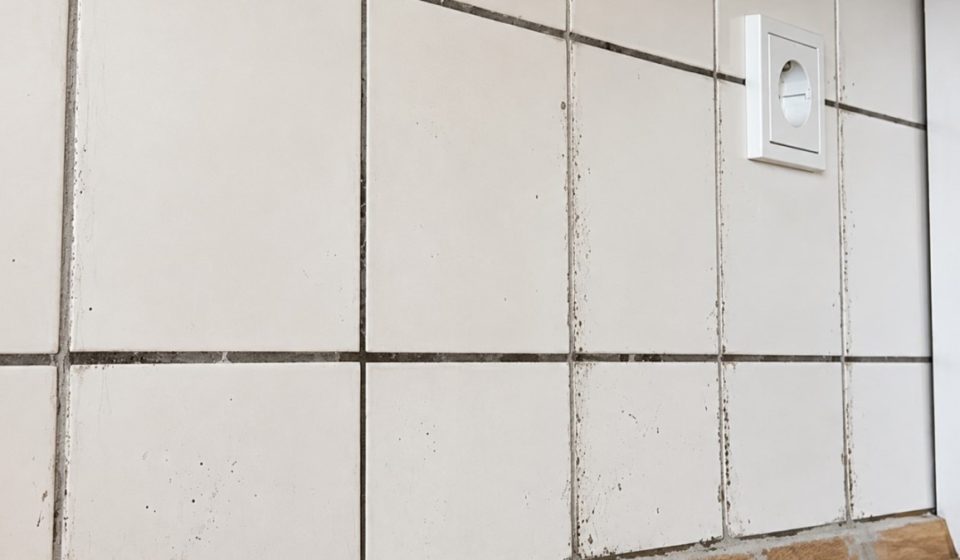
White square tiles covered the backsplash beneath the upper cabinets, running from the wood countertop to the underside of the cabinetry. Gray grout formed a grid across the wall, with dark residue visible along several joints and near the countertop trim.
White cabinet doors with red round knobs surrounded the work area. Rather than changing these finishes or removing the backsplash, she focused on the narrow lines separating the tiles.
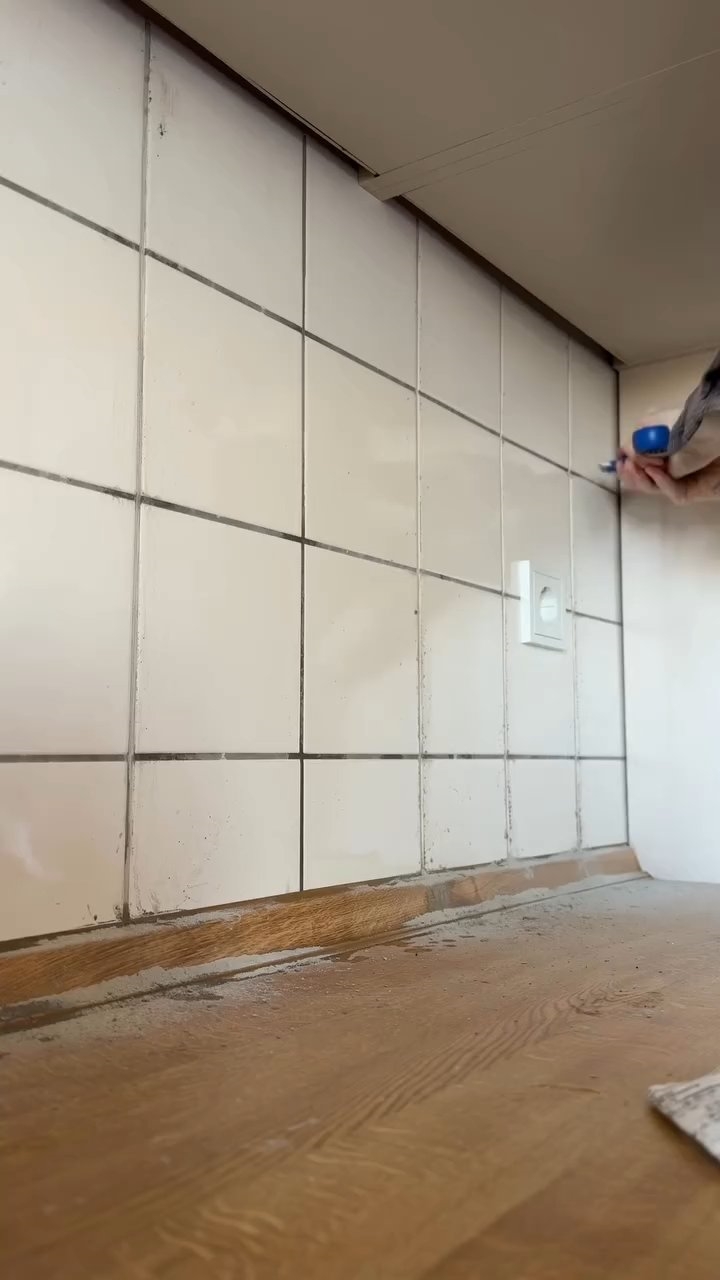
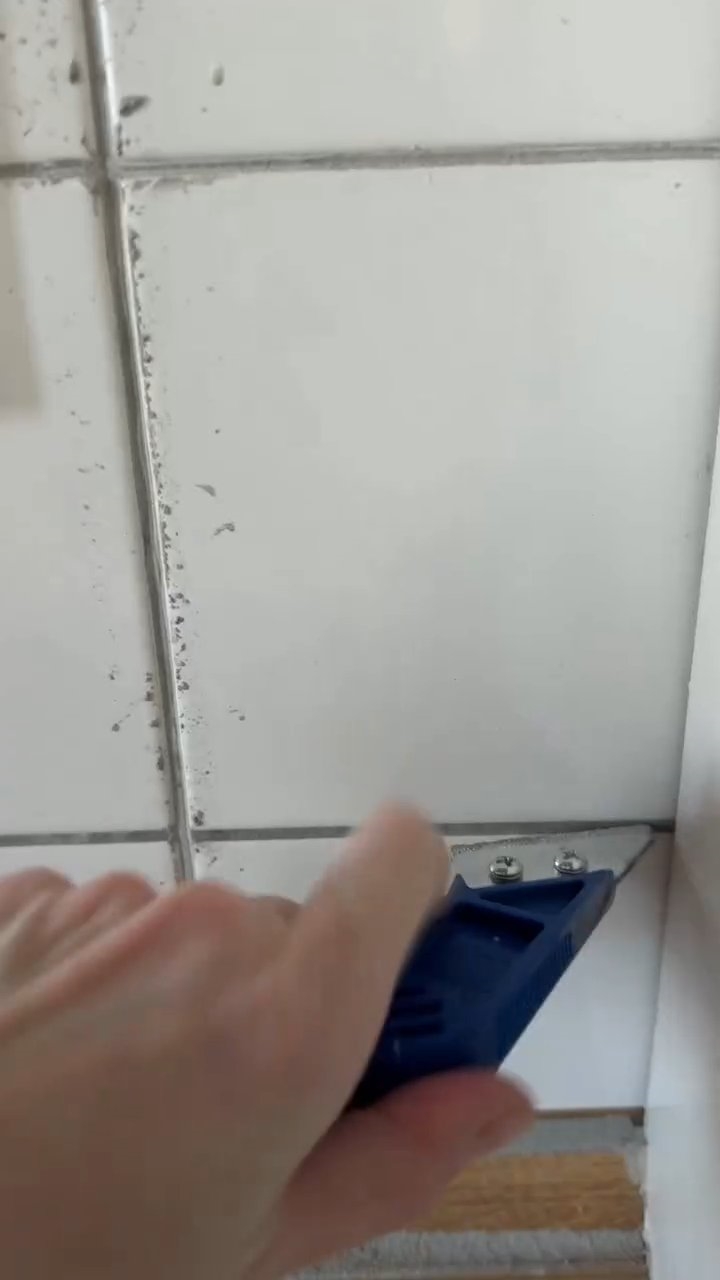
Before applying the new material, she used a small scraping tool along the joints. The blade followed the edges of the tiles, reaching into the narrow spaces where old grout and residue had collected.
Preparing those lines gave the new material space to sit within the joints instead of covering the tile faces.
She mixed blue pigment into white cement grout inside a plastic container, stirring until the mixture became a thick blue paste.
Using a grout float, she pressed the mixture into the joints and dragged the tool across the tile surfaces. Blue grout spread beyond the lines during application, covering parts of the white squares as she worked.
Working beneath the upper cabinets, she continued filling the horizontal and vertical joints. The blue mixture covered sections around the electrical outlets and reached the bottom row above the wood countertop.
As she removed excess material with the float, the blue grid began to appear against the original white tiles.
A damp cloth removed the blue residue left on the ceramic surfaces. She wiped across individual tiles, clearing the streaks while leaving the colored grout inside the joints.
Extra cleaning was needed around the electrical outlets and along the wood trim, where the mixture had spread onto adjacent surfaces.
Finished joints create a blue grid beneath the white upper cabinets. The original tile arrangement remains, with horizontal and vertical lines extending across the backsplash above the wood countertop.
From the opposite end, the blue grout continues across the wall beside the tall cabinet. Red knobs on the surrounding doors provide another strong color against the white cabinetry.
Side-by-side images show the backsplash before work began and after the blue grout was applied. Gray lines and dark marks disappear from the finished section, replaced by a blue grid across the same white squares.
The homeowner plans to continue the treatment on the remaining side of the kitchen. Her project shows how changing the grout color can alter a backsplash without removing the tiles, although a lasting result depends on preparing sound joints with enough space for the new grout to bond.
Would you choose bright blue or black grout for white kitchen tiles, or keep the original gray?