
The topic NASA’s Voyager 1 space probe is now one light-day away from Earth is drawing steady attention: readers, analysts, and industry watchers are all tracking how the story may unfold in the days ahead.
This is taking place in a fast-moving context — product cycles, platform shifts, and competitive moves can reshape the outlook quickly, so the details below are worth a careful read.
What follows is a clear walkthrough of the main facts and angles you need to make sense of the news.
It traveled more than 49 years to get to this point, and its journey isn’t done yet.
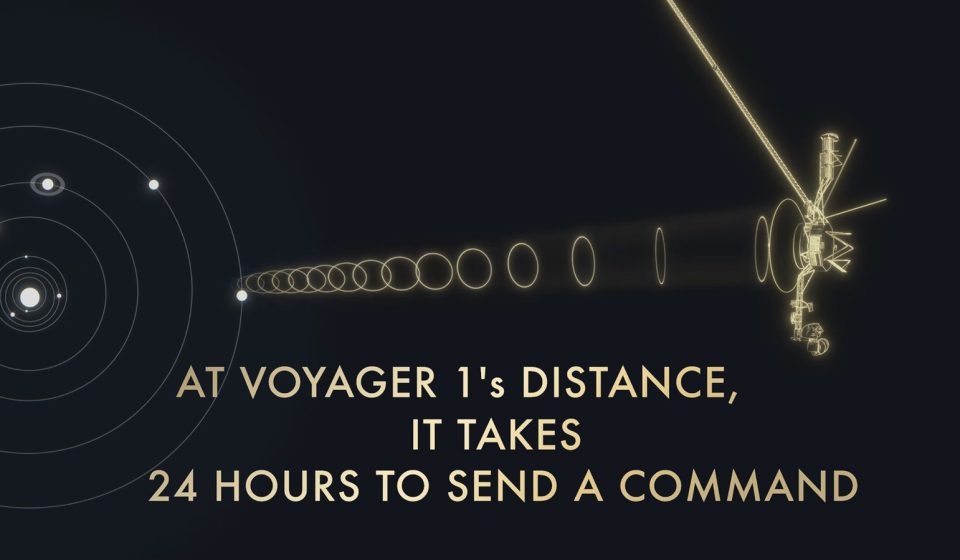
If NASA’s estimates are correct, Voyager 1 is already one light-day away from our planet. NASA expects it to have reached that milestone at 5:16:07 AM Eastern time today, November 18. One light-day is the distance a particle of light can travel in a day. Since radio waves travel at the speed of light, it now takes 24 hours to send a command to the probe and 24 hours to get a message back. That’s why NASA won’t be able to confirm exactly what time it reached one light-day away until tomorrow, when the probe’s message arrives.
“It’s never happened before, and it may never happen again — it’s that kind of extraordinary,” said Voyager mission manager Kareem Badaruddin.
Voyager 1 headed to space in 1977 as part of NASA’s program to study not just our Solar system, but also interstellar space. It was launched 16 days after Voyager 2, but it has since traveled farther than its twin and any other probe we’ve sent out. Voyager 1 reached interstellar space — that’s the region between star systems — back in 2012, before Voyager 2 did. It suffered technical glitches, and NASA had to shut down some of its features to keep it going despite the diminishing plutonium in its generator. But it’s still around and hasn’t stopped its journey.
After traveling for 49 years, two months and 11 days, it’s now believed to be about 16 billion miles from our planet—and it’s not done yet. Voyager 1 is headed toward a star called Gliese 445, about 17 light-years from Earth in the Ursa Minor constellation. In terms of space distances, that’s not so far away. However, none of us would be here by the time it reaches that goal: It’s expected to pass within 1.7 light-years of Gliese 445 in 40,000 years.