
The topic Argentina’s bid to stop Falklands oil drilling rejected is drawing steady attention: readers, analysts, and industry watchers are all tracking how the story may unfold in the days ahead.
This is taking place in a fast-moving context — product cycles, platform shifts, and competitive moves can reshape the outlook quickly, so the details below are worth a careful read.
What follows is a clear walkthrough of the main facts and angles you need to make sense of the news.
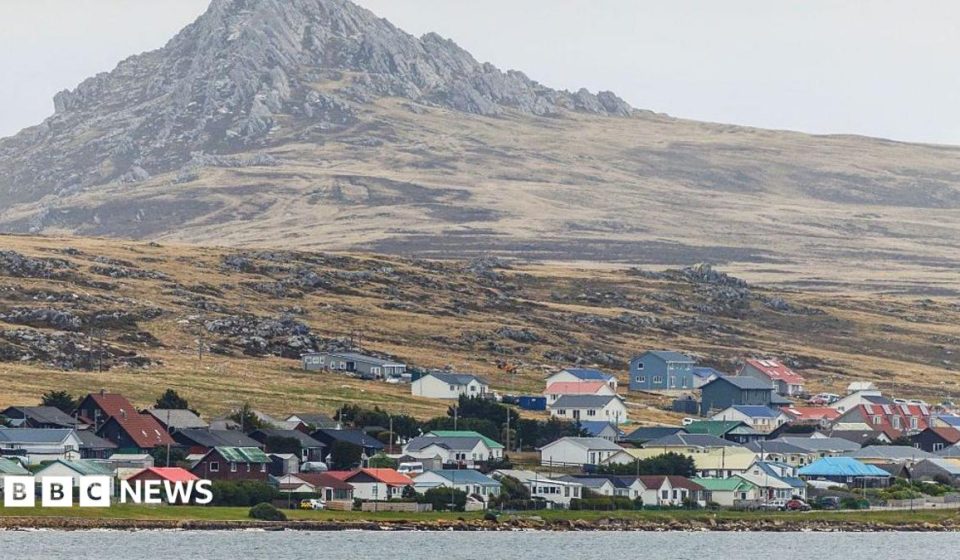
Argentina’s bid to block an oil exploration project near the Falkland Islands has been rejected by a UN-backed international tribunal.
The Argentinian government had called for the Sea Lion venture to be halted as it claimed there was an ongoing dispute over the sovereignty of the Falklands, a British overseas territory. The UK has repeatedly rejected that claim.
Speaking on Saturday, the president of the International Tribunal for the Law of the Sea said it was the wrong court to rule on questions of sovereignty.The decision was upheld in a vote 18-3.
After the ruling, Argentina’s President Javier Milei said “this decision is not the final word” and declared “the Falkland Islands are Argentine”.
In a joint statement, UK Foreign Secretary Ed Miliband and Attorney General Ellie Reeves said that Buenos Aires must “respect the right of the Falkland Islanders to determine their own future.”
“Argentina sought to stop the Falkland Islanders making their own sovereign decisions and failed in this attempt,” they wrote, urging Argentina to “end its wider economic pressure” against the territory.
The case is the latest diplomatic row between the UK and Argentina, which fought a 74-day war over the islands in 1982.
Buenos Aires argued that while it believed there was a territorial dispute over the Falklands, nothing should be done that could change the situation – including the building of oil wells.
The UK responded that the Law of the Sea court had no jurisdiction over the issue, and that pausing the Sea Lion project could have huge economic consequences on the islands’ local population and companies connected with the venture.
The tribunal’s decision ultimately rested on its own powers – this was a territorial issue, and a maritime court was not the right place to hear the dispute.
Buenos Aires disagreed, writing in a statement after the decision that “Argentina did not ask the court to rule on sovereignty”, but to apply the United Nation’s sea laws to the UK over its “exploitation of our resources”.
It also said that five individuals would face sanctions for their involvement in the oil drilling venture, something Milei had been threatening. The statement did not specify who the sanctions would be against.
“The message is clear: those who participate in the illegal exploitation of our resources will face the consequences,” the statement said.
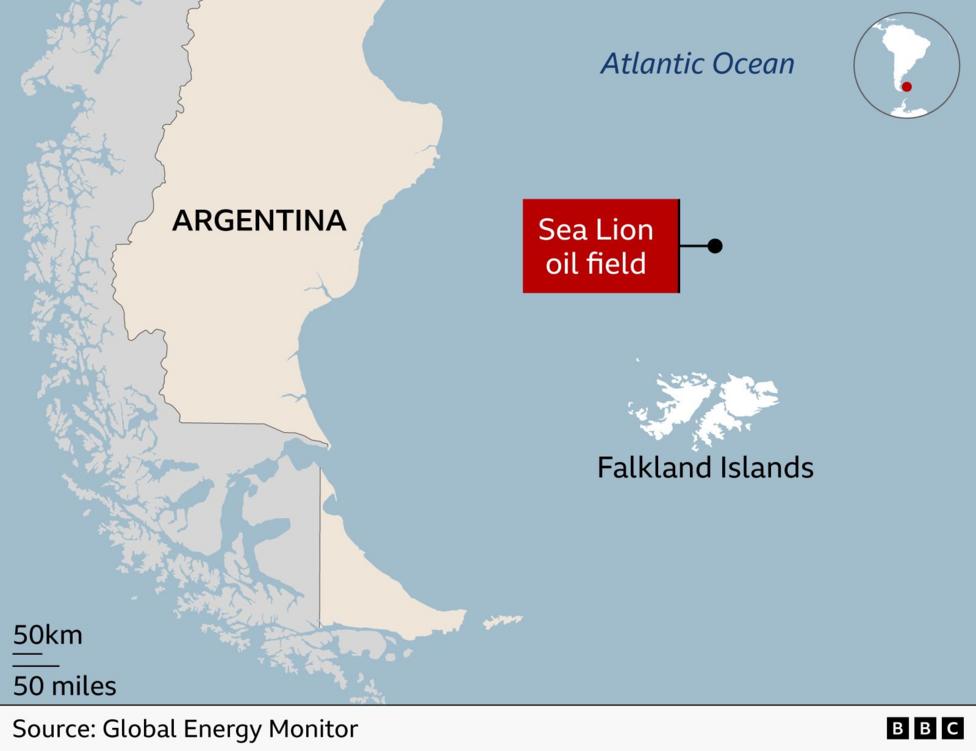
The Sea Lion oilfield, around 130 miles (209 km) from the Falkland Islands, contains an estimated 1.7 billion barrels of oil.
Two oil companies – Britain’s Rockhopper Exploration and Israel’s Navitas Petroleum – are due to begin extracting from the oilfield within two years, potentially generating huge revenues for the roughly 3,500 inhabitants of the islands.
But the Argentinian government claimed the marine environment of disputed maritime areas is protected by international law.
The 10-week war that was fought in 1982 started when Argentine forces landed on the Falklands to stake a territorial claim over the islands, as a British military task force fought to ejected them.
The conflict led to the deaths of 255 British military personnel, three islanders and 649 Argentine military personnel.
Despite its defeat, Argentina has always maintained its right to the Falklands, and over the years, successive governments have pressed their claim with varying degrees of aggression and diplomacy.
The UK government has made clear that sovereignty remains with Britain and maintains that the island’s population has a right to self-determination.
In a 2013 referendum, residents of the islands voted overwhelmingly to remain a British overseas territory – with 99.8% voting in favour and just three voting against.