
The topic So Long, Cybertruck is drawing steady attention: readers, analysts, and industry watchers are all tracking how the story may unfold in the days ahead.
This is taking place in a fast-moving context — product cycles, platform shifts, and competitive moves can reshape the outlook quickly, so the details below are worth a careful read.
What follows is a clear walkthrough of the main facts and angles you need to make sense of the news.
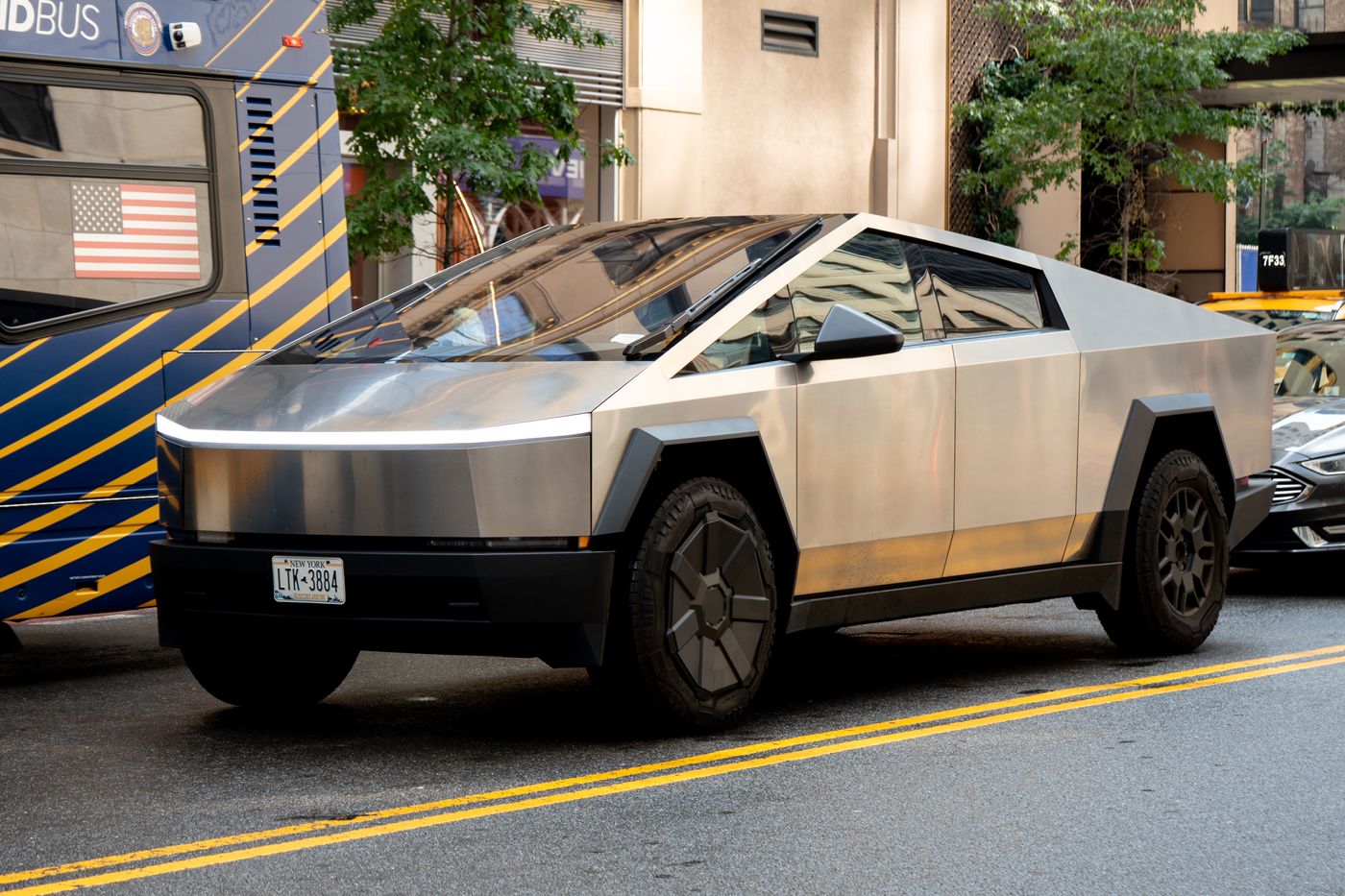
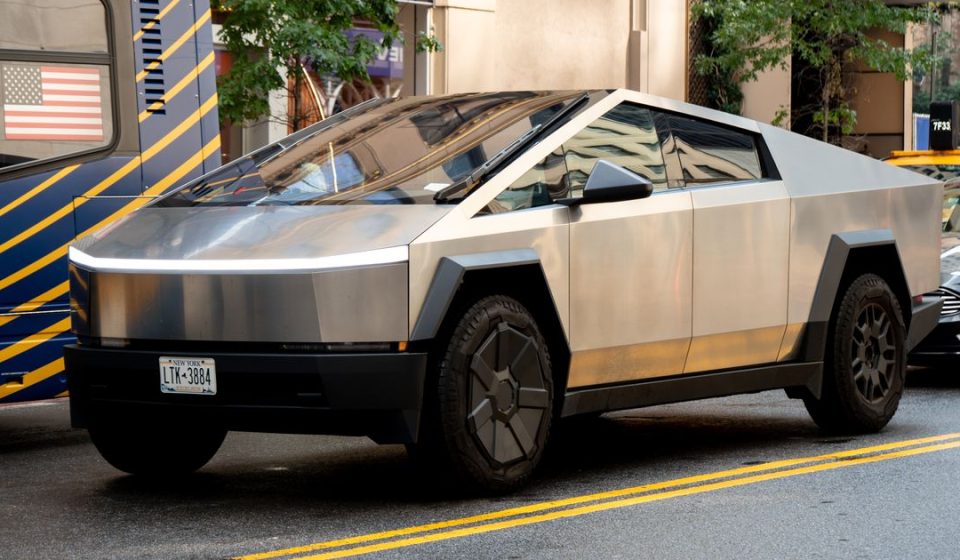
The Tesla Cybertruck, a product that exists at the curious intersection of low-emissions global responsibility and red-pilled macho Trumpism, is done. Elon Musk says production will wind down around the middle of next year to make way for the future Cybercab, a putatively autonomous vehicle of much more conventional shape. Announced with a prototype in 2019, the truck became available for the 2023 model year, a timeframe that approximately parallels Musk’s public-image collapse, as he went from “huckster with genuinely big ideas who is nonetheless annoying” to “danger to the republic.”
Everything about the Cybertruck was designed to provoke. There was its knife-edged form, of course, an origami prism often compared to a child’s drawing of a car. It was very large and very heavy, one of the biggest SUVs you could buy, and it made a correspondingly huge statement on the road. The stainless exterior was eye-catching. Its sharp edges put pedestrians at risk (and barred it from being sold in Europe, a huge market that has lost enthusiasm for Teslas in the past couple of years). It fell short when it came to safety devices that are standard on other cars, like the sensor that keeps a motorized trunk lid from closing on fingers; in Musk-world, that was a marker not of dodgy design but of user error. In the actual world, great design conforms to human behavior as it naturally happens, rather than making people stay alert to the machines.
And let’s face it: Like much in the Trumpist world, its styling was a smirking asshole’s answer to an actual, reasonable point of debate. Most automobiles are now shaped by aerodynamics, and the wind prescribes a similar teardrop shape to almost every carmaker. It’s understandable for buyers to crave something different, an impulse that sometimes leads designers to beauty and other times gives us the Pontiac Aztek. What they perhaps did not want either was the spawn of a DeLorean (also heavy, also stainless, also produced by a druggy guy) mated with a first-generation stealth fighter or perhaps a plywood shipping crate. To quote the great Douglas Adams: “Okay, so ten out of ten for style, but minus several million for good thinking.” Maybe it was more like six out of ten. It’s a little like the Trump ballroom, which confronts a significant problem — the White House is too small to serve the contemporary executive branch’s demands — and solves it not with analysis and care but a deeply flawed behemoth, one that’s gleaming and shiny and paid for in filthy money.
Tesla doesn’t say exactly how many Cybertrucks it sold, but the electric-vehicle site Electrek estimates a peak of about 30,000 per year, a bit over 10 percent of the 250,000 that the company projected, starting decently and fading fast. By way of comparison, about 1.5 million Tesla Model 3 cars were sold in 2025. The Cybertruck ended up functioning, probably unintentionally, as a mobile billboard not only for Tesla but for other companies, because its flat surfaces were perfect for advertising wraps teasing everything from pressure washing to snoring therapy. It may not have been designed as a halo car like the Chevrolet Corvette — a model produced in small numbers to maintain brand enthusiasm and demonstrate technical prowess while more prosaic vehicles bring in most of the money — but it ended up thus.
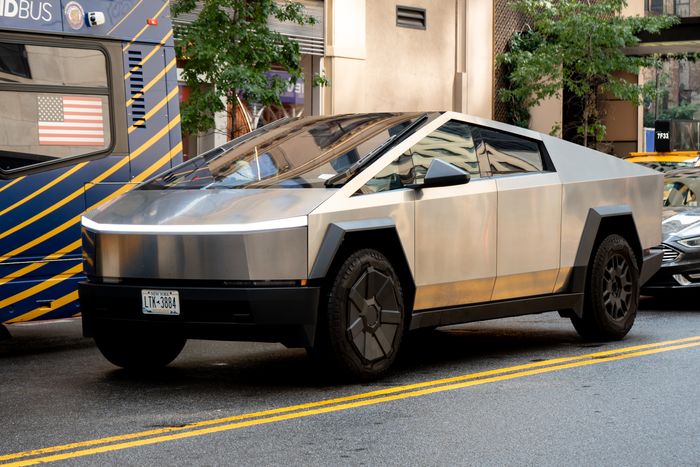
Indeed, if you think of the Cybertruck that way, and only that way, it was a success. There are about 90 million cars sold each year, and this one tiny production line probably got as much media attention as all the rest combined. Beginning with its infamous introduction — at which the nearly unbreakable windows most definitely got broken — it drew attention like nothing else. In New York City, land of hair-thin maneuvers and Hunger Games parking wars, the scale of the thing alone presented its own moving spectacle or target. If you creatively relabel Tesla’s losses on the Cybertruck, however much they amounted to, and call the thing a marketing expense rather than an actual purchasable vehicle, it was a smash. Its lead engineer says it also yielded some technologies from which future designs will borrow.
Perhaps another comparison is in order. The most legendary dud in automotive history was Ford Motor Corporation’s Edsel. It constituted not just a single car but an entire new subdivision, introduced in the fall of 1957 with a line of seven models (four sedan styles, three station wagons). It, too, was projected to sell 200,000 cars a year. Like the Cybertruck, it, too, was intended to look sharply different from everything else on the road, especially from the front: Its designers, noting the grille on every other automobile on the road, said, “How about we make it vertical instead or horizontal?”
They ended up with an odd shape that was variously likened to a horse collar, a pickle, a lemon, or something more crudely anatomical. The Edsel line — is this starting to sound familiar? — staggered along for two years and change, its sales numbers falling as it gained a loser reputation and its range of models gradually scaled back. The production tally had reached about 120,000 when Ford abandoned ship at the end of 1959. “Edsel” has been shorthand for “flop” ever since. Given the election results this week, despite Musk’s half-billion-dollar last-minute spending, might we propose a 21st-century equivalent? “Hoo boy, that was a real Cybertruck.”
By submitting your email, you agree to our Terms and Privacy Notice and to receive email correspondence from us.