
The topic Best Indoor Garden Systems I’ve Been Testing for Years (2026) is drawing steady attention: readers, analysts, and industry watchers are all tracking how the story may unfold in the days ahead.
This is taking place in a fast-moving context — product cycles, platform shifts, and competitive moves can reshape the outlook quickly, so the details below are worth a careful read.
What follows is a clear walkthrough of the main facts and angles you need to make sense of the news.
Did you cut down on lettuce consumption due to cyclosporiasis outbreaks over the summer? I didn’t. Not because I threw caution to the wind and bought the produce anyway, but because I grow multiple types of organic lettuce myself, in my own house, in less than a few square feet. And you can too.
For the past two years, I’ve been testing various indoor smart garden systems in my home, which have given me year-round access to fresh tomatoes, peppers, strawberries, and even mushrooms. Most of them are easy for anyone to set up and use, with minimal space and maintenance requirements.
There’s an indoor gardening setup for just about any household. The Gardyn Home 4.0 ($899), for example, offers total success with no green thumb required if you pay for a subscription, while the Auk Mini 2 ($239) is the perfect attractive yet low-maintenance solution for those who just want fresh herbs. Are these gardens worth it? How much can you really grow? How can you be sure which option is best for your specific lifestyle? Below, learn which gardens stood out in testing, why, and which option might be ideal for your home and needs.
Check out our other sustainable home-tech buying guides, including the Best LED Grow Lights, Best Mushroom Growing Methods, Best Smart Bird Feeders, and Best Kitchen Composters.
Updated November 2026: I’ve added the Lykyn Smart Mushroom Grow Box as a pick, moved a couple of gardens to Others Tested and another to Not Recommended, and ensured up-to-date links and prices.
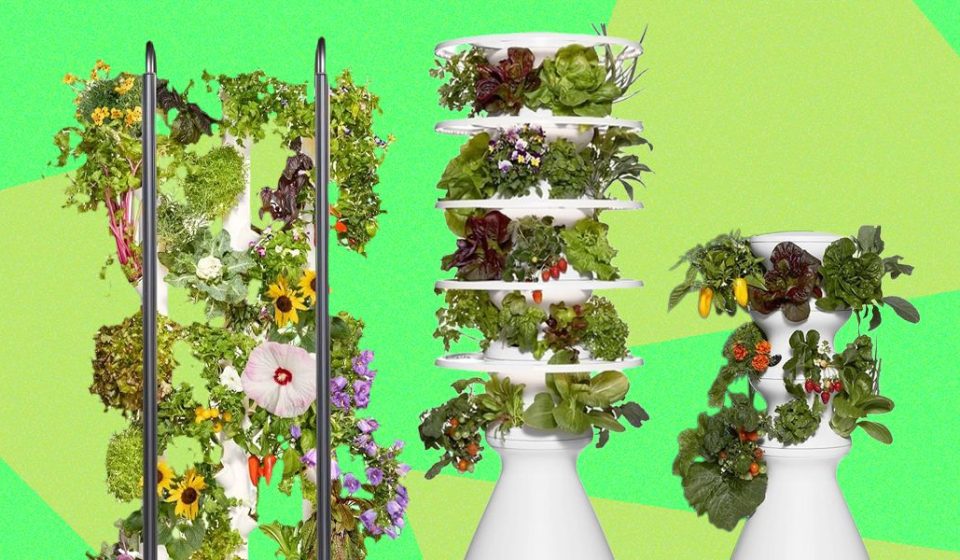
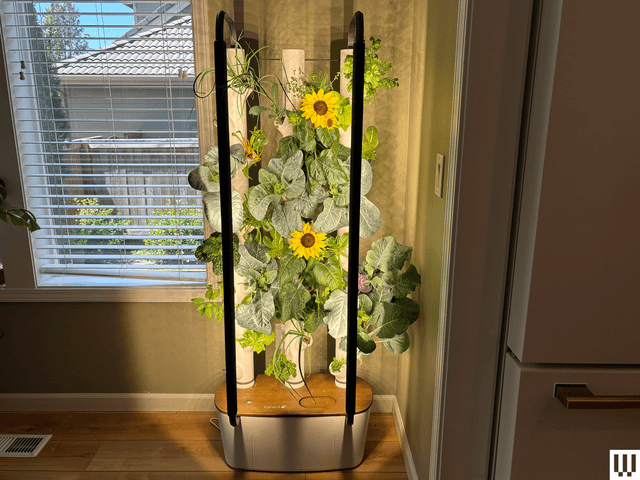
Gardyn Home 4.0 (9/10 WIRED Recommends) was one of the easiest indoor gardens to assemble and set up out of the box; it also yielded the most dramatic success of any of the brands I tried. Flowers, kohlrabi, thyme, and even a whole cauliflower all thrived in this pipe-based, front-light system with room for plants to grow up, out, and every which way.
Seeds arrive in proprietary pods called yCubes, and each Gardyn purchase comes with your choice of yCube sets: Salad Lover, Budding Florist, or Chef Faves. I’ve tried both Budding Florist and Chef Faves, and my favorite is the latter; it features an interesting variety of everything from breen and Tokyo bekana greens to Thai basil and miniature sunflowers.
Though Gardyn recommends starting the yCubes in the company’s add-on $80 nursery, I’ve germinated plenty of yCubes right in the system just fine. (Make sure you don’t add nutrients until they sprout. If you’re germinating yCubes later on, when nutrients are already in the system, you can just use a shallow bowl with loosely tented plastic wrap placed on the Gardyn’s base.) The seeds arrive tucked in mineral wool, snug in their little yCubes that slot into larger cups (“yPods”) that fit into the pipes. When the Gardyn waters the plants, the yPods fill with nutrient-infused water, and the plants’ roots grow right into the water.
Part of what makes the Gardyn foolproof is the subscription app add-on, Kelby, which monitors your plants via attached sensors and cameras. It delivers customized watering and lighting schedules, as well as maintenance suggestions via AI (which an anonymous source told me is basically OpenAI’s ChatGPT with an overlaid prompt). This subscription adds an additional $259 a year to the base purchase price, though it includes a certain number of credits per month—depending on whether you have the Home or Studio model—to order new yCubes. There’s a free 30-day trial for Kelby, but you can definitely still use the Gardyn without it, relying on manual light and watering controls. Also, there have been some recent privacy concerns with Kelby, which makes me more apt to do away with it altogether (more below).
Once a month, the base needs to be emptied and scrubbed. Every few weeks, the roots need to be checked for root rot and growth outside the yPod, examined for whether it’s time to prune, and/or tucked back in if they’ve wandered too far. This maintenance is admittedly a bit laborious, and if you do not do it consistently, you will be very sorry when it’s time to clean the Gardyn and prepare it for its next planting. (Ask me how I know!)
I now have two Gardyns, a Home 4 and a smaller Studio 2 that holds fewer pods. Aside from some non-sprouting yCubes (which the company will replace upon request), I have no major complaints about Gardyn’s system. Though I will note that the plants in the Studio have been overall less lush than those in the Home due to the Studio having one light bar rather than two (which is why my primary recommendation remains the Home). I also like that Gardyn offers a Vacation Mode, which adjusts the lighting and watering to slow growth and minimize maintenance tasks while you’re away. Also note that Gardyn is now FSA- and HSA-eligible.
NOTE: Throughout the spring and on July 2, 2026, the US Cybersecurity and Infrastructure Security Agency released advisories regarding vulnerabilities in Gardyn Home and Studio devices. These security weaknesses could have allowed someone to take remote control of a Gardyn device, access plant photos, and obtain personal information such as names, addresses, phone numbers, and email addresses. Gardyn claims it has remediated these vulnerabilities with the most recent firmware update and advises customers to ensure their Gardyns are internet-connected and running firmware version 619 or later. If you think your device may have been compromised, email [email protected] or call 844-4-GARDYN. For more information, see Gardyn’s Security update for Gardyn Home and Gardyn Studio.
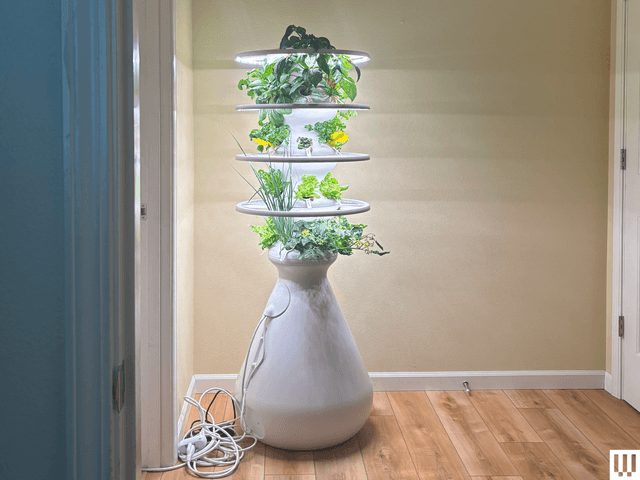
I admit I was not aware until I opened the Lettuce Grow box that Zooey Deschanel and her ex-husband, Jacob Pechenik, founded this company. Despite their divorce, they continue to work together promoting it. Lettuce Grow’s Farmstand is certainly a unique structure, with a bulbous, water-filled base topped by tiers set between rings of full-spectrum LED lights. The whole setup looks not unlike an old-school strawberry planter redesigned as a set piece for 2001: A Space Odyssey. There are models for indoor and outdoor use (the latter is the same, just sans the light rings).
I found the Farmstand easy to assemble and set up; everything snaps and clicks together intuitively. It’s also very modular. Though Lettuce Grow recommends no more than six levels for stability, if you buy a Small Farmstand (18 plants) and decide later on that you want to make it a Medium (24) or a Large (36), you can buy extra levels and light rings that snap on in less than a minute.
The biggest issue I had with the Farmstand is that, at the outset, the company sends grown seedlings in reconstituted peat pellets (each Farmstand comes with credits for users to pick the plants they want), which is helpful in terms of success. But in my case, this resulted in a massive whitefly and aphid outbreak. A search through Lettuce Grow’s Farmstand Community Facebook group revealed pest-infested seedlings to be an extremely common issue, but the company now offers a Plant Protection kit with Arber organic fungicide and insecticide for $36. I used the insecticide as directed when setting up my latest grow, and it worked—no sign of pests for more than four weeks.
Because the water cascades down over plant roots instead of the plant cups having constant contact, the Lettuce Grow is best with seedlings. So for my second grow, I used bare-root strawberries I bought from a different vendor.
It’s worth noting that the 20-gallon reservoir renders the unit immobile once it’s full, making it difficult to empty and refill. Lettuce Grow sells an excellent dolly for $80, but I wish it were included with the Farmstand. I also highly recommend using a smart plug to control the timing for the lights and water pump. Lettuce Grow sells its own for $25 that connects to its app.
The original Auk Mini (8/10 WIRED Recommends) was one of the best-looking tabletop hydroponic gardens, available in natural wood finishes and featuring a contemporary Nordic flair. The newer Auk Mini 2, however, has one-upped it with a more efficient light bar; an easy-to-use app with vacation mode; and fun color options including Sage and Terra-Cotta.
Just like the original Auk, setup and operation are about as simple as it gets: Just plant the included Genovese basil and parsley seeds—or whatever you’d like—in the four pots (which are designed to work with the provided coco coir), fill the reservoir, add pumps of the provided nutrients, and plug it in.
The app is totally optional, but it will recognize your garden immediately without you having to make an account. It lets you set light schedules (dim enough not to be intrusive in a room). The coco coir absorbs the enriched water through slots in the pot bottoms. Sprouting took just days, and I had fully harvestable cilantro, parsley, and basil—enough for pesto, even—within a few weeks.
While the first Auk Mini’s herbs tended to flop over and look messy, the Auk Mini 2 includes a gravel “topper” that creates a sort of crust over the top, keeping the herbs upright, lush, and bushy, just like in the marketing photos.
Unlike certain other systems, the Auk requires no pH tests, loud pumps, or tubing to stay clean. The only downside is the price compared to similar-sized tabletop systems like the LetPot (below), which have more plant slots. Note that the Auk Mini 2 features an add-on kit for tomatoes and peppers ($49) that includes bigger pots and longer dowels for a higher light bar, but I have not tested this.
AeroGarden and I go way back. I’ve had multiple AeroGardens since the brand’s inception in 2006, which is why I was sad when the company announced it was going out of business in late 2024. But now it’s back with a spiffed-up line of systems, including the flagship Bounty. It comes in two iterations: the Bounty Elite (pictured) with Vacation Mode, 50-watt lights, a color touchscreen, and slick sunrise/sunset lighting; and the Bounty Basic, with 30-watt lights and none of the other features. Both systems hold nine plants, have telescoping stems for the lights, and come with a removable, cage-like trellis that can support and corral wayward herbs or vegetables.
The general form factor is the same as the OG tabletop gardens, but now with the ability to see the water level on the screen (the Basic has one, but it’s not color or touchscreen), as well as more efficient lights, quieter pumps, and the ability to adjust light intensity and set a schedule. The pump runs about every half-hour and is not noticeably audible unless the water level is at 50 percent or less, at which point the garden sounds like a pet drinking water. (“Is that your cat?” a friend asked after a couple of hours of sitting near the unit when it was low on water.) Lights stay on for about 16 hours, and you can choose which hours in AeroGarden’s app. (The app is handy but not necessary—I abandoned it after about a week of it repeatedly “forgetting” my garden.) The Elite’s Vacation Mode is rare for these tabletop gardens and critical if you’re frequently away from home.
Each AeroGarden comes with a set of branded sponge-and-basket pods preloaded with herb seeds. My press tester also came with the Salsa Garden kit, which consisted of six tomato pods and three jalapeños. The tomato plants are hardy, healthy, and ready to flower, but because they germinated first, they’ve overtaken the poor jalapeños, which look anemic and are barely visible beneath the tomato leaves. A variety of AeroGarden refill kits are available, but I can tell you the AeroGarden baskets take the same generic refill sponges I recommend for the LetPot below, so do what you will with that information.
A bounty of AeroGarden dupes litter the “hydroponic garden” search pages on Amazon, having gathered momentum after AeroGarden originally went out of business in late 2024, but LetPot is the best-established. Instead of AeroGarden’s max-size nine-pod Bounty models, LetPot’s LPH-SE “Senior” features 12 holes for pods.
The AeroGarden Bounty is currently lower priced than the LetPot, but the LetPot ends up cheaper overall since you can grow your own seeds—no proprietary pods required. (Though the top-mounted light, at only 16 inches, will ultimately be too limiting for tomatoes, peppers, or other fruiting plants.) I used a packet of rainbow chard seeds, also from Amazon, and had immediate and sustained success. Even though the Senior is LetPot’s second-largest model—the “Max” has 21 pod slots—I like that it’s still about the size of a bread box. In fact, I kept it right on my dining room table so it was easy to snip off a small bowl of baby chard for salads. (It would also be great for starting seedlings for other gardens, like the Lettuce Grow, above.)
To start, fill the 5.5-liter reservoir with water and add 15 milliliters of each included nutrient; they come dehydrated but reconstitute to 100 milliliters—enough for about six water fills. A water-level gauge on the top sticks up like a thermometer and is easy to view from across the room. There is an accompanying app in which you can set the 16-hour window you want for the 24-watt lights, but this feature did not work with my test model, despite my syncing and resetting it multiple times. I ended up having to turn the whole system off when I went to bed and on when I woke up, which admittedly wasn’t ideal. However, this was the only issue I’ve had so far in the six or so months I tested the LetPot, which is otherwise exceedingly easy to use and maintain.
The LetPot comes with a pack of plastic inserts, peat plugs, and germination stickers, but they’re not proprietary—many vendors offer the same kind for as little as 7 cents each. Combined with LetPot’s already low price, this makes the garden one of the few likely to pay for itself in a reasonable amount of time.
Vertical indoor gardens are, by virtue of their existence, somewhat dramatic-looking, but this unit takes the plants-as-art concept to another level. Just Vertical is a Canadian company known for its custom and commercial indoor vertical farms. The brand emphasizes self-sufficiency with its stark lack of subscriptions, capsules, or proprietary pods or trays. In fact, all EVE gardens come with enough seeds for a year, according to the data the brand, as well as a big bag of growing sponges and a cute little nursery with an LED light.
“When you purchase a new garden, we will give you all the supplies you need to grow back the value of your garden right out of the box,” Just Vertical notes on its website. “We believe that food is a right and you should profit from your gardening … you shouldn’t need to have a subscription service for your garden.”
Whether you’ll be able to recoup the EVE’s almost-$600 cost in butter lettuce and herbs is up for debate, but indoor-garden companies that encourage you to use your own seeds are few and far between, so I appreciate the sentiment. I also appreciate that the EVE comes mostly assembled in its cabinet; all you have to do is screw on the legs and set up the tank. (My unit was short four screws for the feet, which were also square-headed and came with no tool.)
I have two Gardyns, a Lettuce Grow, and the EVE in my main living area. Despite its size, the EVE does the best job of blending in with its surroundings. The pump runs quietly and very briefly every 30 minutes, and the LEDs are softer and more diffused. Like the Rise garden, the 12-liter water tank sits hidden inside the 19-by-8-inch-footprint cabinet, which comes in oak, walnut, gray, black, or white. It only grows 12 plants, which is less of a yield than you’d get from the Gardyn or Lettuce Grow, and plants tend to get crowded the larger they get, but if you just like the look of a vertical garden and the no-fuss ability to grow your own seeds, then the EVE would be an ideal pick. If you’re located in the US, note that it ships from Toronto and delivery will take some time. I also had to pay $9 for import paperwork fees.
Microgreens are a bona fide health powerhouse, and I’ve found there’s no easier or more successful way to grow them than the InstaFarm (WIRED Recommends 8/10). This unit arrives completely assembled—just open the box, plug it in, and fill the water reservoir. You will need to use InstaFarm’s proprietary compostable trays, which come pre-filled with soil and organic microgreen seeds, with nutritional information printed on the lid. InstaFarm president Philip Hartman says the garden intentionally uses soil rather than hydroponics, as it’s easier to control the variables.
“Hydroponics is very much dependent upon the pH of the water, so depending upon the water used, you will have varying germination and growth results, which can be frustrating,” Hartman says. The InstaFarm is blessedly frustration-free. A nozzle moves along the three levels every 90 minutes, sensing the plant height, humidity, and temperature, and dispensing an appropriate spray of water. It will also sense when there is no tray, so you can add as many or as few trays as you’d like.
And unless you’re eating copious amounts of microgreens each day, I’d recommend starting with just a few trays—they grow a lot of microgreens, and fast. I had more than I knew what to do with in about five days. In my monthlong test of the InstaFarm, the only issue or hassle I had was finding a place for it when I found it did not fit under my kitchen counter, and when the sensor seemed confused by a tray of red beet greens (but only the red beet greens) and consistently overwatered, overflowing the tray. Other than refilling the water reservoir, which easily clicks in and out of place with a magnet, maintenance has been nearly zero.
Trays come in packs of nine for $22 and are available individually or by subscription, which knocks $2 off the price. (You can also get a discount on the InstaFarm itself if you lock into a monthly tray subscription.) Individual cultivars are available, as well as blends for smoothies, salads, hormonal balance, and more. You can also buy just-dirt trays to grow your own greens or garden starts.
After seeing ads for this science fiction–esque mushroom grow box all over my social media for the past year, I had to see what the fuss was about. It turns out, the Lykyn Smart Mushroom Grow Box (8/10, WIRED Recommends) looks just as dramatic in person as it does online, with a centerpiece mushroom shrouded in moody lighting and fog.
The setup is simple: Fill the reservoir with distilled water, plug the LED into the back of the unit, and pair it to the app. Choose your species of mushroom fruiting block (you can buy one from Lykyn for $25, but any brand’s block will work; the Grow Box itself does not come with one) in the app, and it will select the appropriate light and misting cycles. The ultrasonic misting system is a little finicky, as is the sliding door, but the Lykyn otherwise worked flawlessly with the shiitake and pink oyster mushroom blocks I tried. So flawlessly, in fact, that the whole process was over in about a week, with only four days or so of attractive mushroom growth.
Some of the fruiting blocks come—and must remain—in plastic bags, so when the mushroom isn’t fruiting, you will spend most of your time looking at a black plastic bag (or a block of compressed sawdust). My shiitake fruited three times, but each flush was less impressive than the one before, and the oyster only flushed once.
Click and Grow Smart Garden for $102: Click & Grow Smart Garden’s seed pods come in a Nespresso-evoking plastic three-pack with a tear-off cover. (A three-pack of pods starts at around $15.) Put a nutrient-packed “smart soil” seed pod in one of the Click & Grow’s cups with the wicking bottom, fill the reservoir, and that’s it. It was one of the simplest watering systems I tried: a wick at the bottom of the cup brings water up to the pods, and the roots stay in the cups. A little bobber on one end tells you when the water level is low and needs a top-off, simply by floating lower than the growing surface. It’s also small, so you can plop it on a shelf or countertop. (Note that the 9, pictured above, is currently out of stock, but you can sign up to be notified when it’s available.) At the same time, this was also one of the slowest-growing gardens I tested—it took weeks to get even one lettuce leaf. One of my lettuce pods didn’t even sprout at all. Still, this isn’t a terrible option for busy people who are interested in growing something like flowers, where yields aren’t a concern.
North Spore Automated Monotub Kit for $165: If you already know how to DIY your own mushroom-cultivating monotub setup, this is not for you. Nor is it for those who want something fully plug-and-play. It’s a bare-bones kit—a tub with a lid, filters, a hygrometer, a humidifier, and a fan to maintain airflow—for growing either fruiting blocks or substrate-based mushroom species. My kit came with no paper instructions, so I had to figure out how to use it completely via YouTube and trial and error. That said, when you figure it out, it works. I’ve run it through multiple harvests now, producing more oyster and lion’s mane mushrooms than I knew what to do with. However, note that you will need to replace the filters after a couple of runs; mine got blocked and grew mold.
Rise Garden 3 for $1,499: The three-level Rise has far and away the biggest capacity of any non-DIY indoor garden I’ve seen, along with a pretty traditional form factor. In fact, I’m pretty sure I saw one of these in the corner of my college biology class. Since it’s so large, assembly was a bit tricky, and vague instructions weren’t helpful. I also didn’t find out until after I had already set it up that the peat pods need to germinate first in plastic-lidded “nurseries.” My test unit didn’t come with enough nurseries, so I had to improvise with shallow plastic containers, with the pods weighted to keep them upright in water. After a few days, I noticed the containers—all of them, including the provided nurseries—had begun to grow algae, and the black-plastic surface of the Rise trays was noticeably warm. I brought out my infrared temperature gun to test the temperature and found that the 195-watt LEDs paired with the black plastic had brought the surface up to 95 degrees Fahrenheit. For reference, all of the other indoor gardening systems were room temperature, in the mid-70s. Over time, I noticed herbs and lettuce bolted faster in the Rise 3 than in other gardens, likely due to this heat, which also puts plants at risk for cases of root rot. I’m still a big fan of the Rise’s form factor and its capacity, though, and I think it would be a first choice for heat-tolerant crops, like tomatoes and peppers.
Modern Sprout Garden Jars for $20: These cute Mason jars are as simple as it gets: Rinse the included gravel, then add seeds and water. They’re guaranteed to sprout in five to 10 days and make a fun hostess gift with a tea towel and/or a bottle of olive oil. However, they are definitely more for looks than harvests—I have had the basil, cilantro, and rosemary versions on my windowsill for a little over a year, and I’ve only seen a few usable leaves.
Lettuce Grow Counterstand Set for $149: New from the makers of the flashy Lettuce Grow Farmstand (8/10 WIRED Recommends), this simple, no-pump setup consists of three amber beakers that look straight out of a high school chemistry lab, plus an 18-inch-tall LED lamp that runs on a 16- or 18-hour timer. It relies on the Kratky method of hydroponics, invented by horticulturist Dr. Bernard Kratky, where the plant sits in a cup above a nutrient-enriched water source. In the Counterstand’s case, a wick draws water up to the seedling until its roots can grow into the water. Included with your order are three credits for live seedlings of your choice—I picked parsley, basil, and butter lettuce. This setup is stylish, but consider the counter space it requires, the yields are tiny—maybe a small handful of leaves a week.
Vego EZ Microgreens Planter (2-pack) for $60: This system for growing nutrient-packed microgreens for salads, smoothies, and sandwiches isn’t smart, but it is nifty enough to warrant a mention. Just fill each half-gallon reservoir (made of food-safe plastic) with water, and then cover it with the optional humidity dome. From there, bamboo-fiber capillary grow mats on top will absorb water to germinate your microgreen seeds (not included). Set it near a sunny window, use a grow light, or add Vego’s 10 x 20 dome with a built-in grow light ($80), which fits over both planters. I placed my planters on a Ferry-Morse pop-up plant stand with a grow light from LetPot and had consistent success across multiple grows.
Plantaform Smart Indoor Garden for $800: Plantaform is “the world’s first smart indoor garden that uses fog to grow plants,” according to the data the company’s press release, and it has definitely garnered attention, winning an Innovation Award at the 2025 Consumer Electronics Show (CES). The “fogponics” technologies, ostensibly building on NASA-developed aeroponics, delivers water and nutrients to plants’ roots via an ultrafine mist. The futuristic look of the egg-shaped planter certainly captivated us at WIRED, but when contributor Lisa Wood Shapiro tested it to grow lettuce, she found that you can’t combine different types of plants (i.e., you can only grow lettuce at one time, or tomatoes, or herbs). The machine also degraded her indoor air quality, as tested with an air quality monitor. Users must add an included fertilizer mix to the water, with the resulting concoction being what’s aerosolized in the container; Wood Shapiro found this was not airtight. She suggests limiting the Plantaform’s use to a basement or another space where air quality isn’t as much of a concern, but it’s probably best to hold off on this one until Plantaform can work out some more kinks.
LetPot Smart Seed Starter for $84: There are many grow-light–enabled seed starters on the market, but LetPot’s Smart Seed Starter has more features than most, including a sensor for soil temperature and EC and a 24-watt heating pad underneath. A plastic lid with adjustable vents on either end sits on top. I love the concept, but sadly, quality control is lacking. On my test unit, the power adapter makes a high-pitched sound when the lights are on, the EC sensor only works intermittently, and auto-mode erases whenever it’s unplugged. After about six months of regular use, the light stopped staying on, and to get the unit to cooperate, I had to unplug and replug it repeatedly.
AeroGarden Harvest Lite for $93: Formerly my top pick for Most Giftable, I loved the simplicity of this system, which requires no app—push or hold a single embossed AeroGarden logo on the top to run through all of the controls and settings. However, it doesn’t include sponges, baskets, or pods, which is a bit of a miss at this price point, and the pump failed after only a year of use. AeroGarden offers no replacement parts to fix this issue, which online reviews suggest isn’t uncommon, so faulty units end up in the landfill.
In the simplest terms, hydroponic gardening means growing plants without roots in soil. Sometimes plants are suspended in water, like in the Rise or Gardyn; sometimes they’re in pods attached to a wick, like in the Click & Grow; and sometimes water is sprayed or misted onto their roots, like in the Lettuce Grow. Usually, this process works alongside an artificial light source, either indoors or in an outdoor enclosure.
In addition to the obvious plus of cleaner produce without mud, dirt, or synthetic pesticides, hydroponic systems use much less water than conventional growing methods, since all the water used is either recirculated or taken up by the plants. Some farmers also say they get higher yields from hydroponic systems, as the variables of weather, light, and nutrients are far easier to control. And, because of these variables, farmers are also able to grow varieties of plants in just about any season or region. And there are no weeds!
Just about anything you can think of! I asked FX Rouxel, creator of Gardyn, if there was anything you couldn’t grow in these systems, other than ground-dwelling plants like peanuts or potatoes. “All the things that have big roots,” he said—like carrots, parsnips, and so on. “Otherwise, mostly things that are too big, like apples or lemons.” So, there you have it: No long roots, no trees. But anything else is fair game to try.
First of all, it’s no secret hydroponic systems cost more than just planting some seeds outside in the dirt. Then you’ve got to worry about power outages, pump maintenance, algae, and just general maintenance. And if you’re not careful, water can harbor some nasty stuff, even if that’s just fertilizer, as WIRED contributor Lisa Wood Shapiro found when she reviewed the Plantaform. Some also claim that hydroponically grown herbs, greens, and vegetables have less flavor than their soil-grown counterparts, but I personally have not noticed a difference; I’ve grown perfectly flavorful snap peas, cauliflower, shell beans, salad greens, and even strawberries in nutrient-infused water. In fact, one of the best cucumbers I’ve ever had in my life came from my Gardyn Studio, of all places.
In short, no. The ready-made systems simply remove a great deal of hassle and guesswork from the process, and they usually look pretty cool in the process. It’s also nice to have warranty and tech support in the event something goes wrong. As is often the case with anything filled with water, when something does go wrong, it goes really wrong. (Speaking of, be sure to check out our guide to the Best Water Leak Detectors.)
It largely depends on what you’re growing and how many individual plants can fit in your system. My yields have ranged from a handful of lettuce leaves in the Click & Grow to huge bagfuls of salad greens per day in the Rise—more than my family could possibly eat. As a rule, lettuces and other greens tend to grow faster, while fruiting plants like tomatoes and peppers grow slower and sometimes need pollination to produce. (For instance, with strawberries I have to use a small paintbrush to brush the flowers each morning.)
Most of these systems take up only a square foot or two, so space isn’t as much of a consideration as lights and pump noise. Lights for these gardens typically need to be on around 16 hours a day, and they are bright, so if this schedule would be disruptive, you may want to place them away from a bedroom or any other room where darkness is necessary. On a related note, many of these gardens, like the Lettuce Grow and Gardyn, have loud pump cycles, while Rise’s pump runs continuously. I wouldn’t recommend placing a garden with a noisy pump cycle near a TV or office, where the noise could be a disturbance during certain times of the day. If any amount of noise is a concern (perhaps you live on the top floor of an apartment), you may want to consider a totally silent garden like the Auk or Click & Grow.
Gardens with subscriptions and/or proprietary pods, like Gardyn and Click & Grow, are obviously going to be more expensive over the long run than a truly DIY system like the LetPot. On the one hand, with proprietary pods, you won’t have to source seeds or sponges; you can be assured the seeds are appropriate for that system and hydroponics in general, and if something doesn’t germinate, you will be able to get a replacement or a refund. But on the other hand, this is a recurring cost that will reduce any savings you gain from growing your own food or flowers. As for power, systems with a continuously running pump, like Rise, are going to cost more than ones with no pump, like the Auk. However, I haven’t noticed a significant bump in my electricity bill while testing these gardens, except for one period where I had seven (yes, seven) going at one time.
I unboxed, assembled, and set up each garden exactly as described in the provided instructions, using the seeds, pods, or seedlings that came with the garden. I paid attention to ease of setup, ease of use, maintenance needs, how much space each system required, and how well (or not well) the plants did and why. I noted what was or was not included with each system, and allowed all of the plants to grow to the harvest stage, paying attention to bolting, yields, and general health. I’m a full-time working parent, so I also paid attention to maintenance needs, light schedules, and any general hassles that came up and annoyed me.
I am genuinely passionate about indoor gardening and have an eye on what’s going on in the landscape: what’s new, what’s hot, what’s working for people, what’s not working. I’m always on the lookout for interesting new devices that I find cool and that I believe WIRED readers would like to know about. Affiliate status does not factor into my decision about what to test and write about. If you have a unique, tech-forward indoor garden you like that I haven’t featured, please let me know in the comments.
Most of the gardens I receive to test are samples provided by the companies, with no guarantee of coverage or expectation of what that coverage will look like. Some of the gardens are kept by WIRED in order to perform extended testing, while others are donated locally.